STEP 2 THE REALITY CHECK

The Moment After Clarity
Let me tell you something that I’ve noticed as a Digital product creator myself.
Right after Problem Extraction
when you have finally identified a real problem Something special happens.
You begin to feel relief.
You think:
“This is it.
This makes sense now.
I think I should start building.”
And if you’re also an established service provider
You’re even more confident.
Because you’ve seen this problem.
You’ve solved it for clients.
You’ve experienced it yourself.
So building it feels like the next logical step.
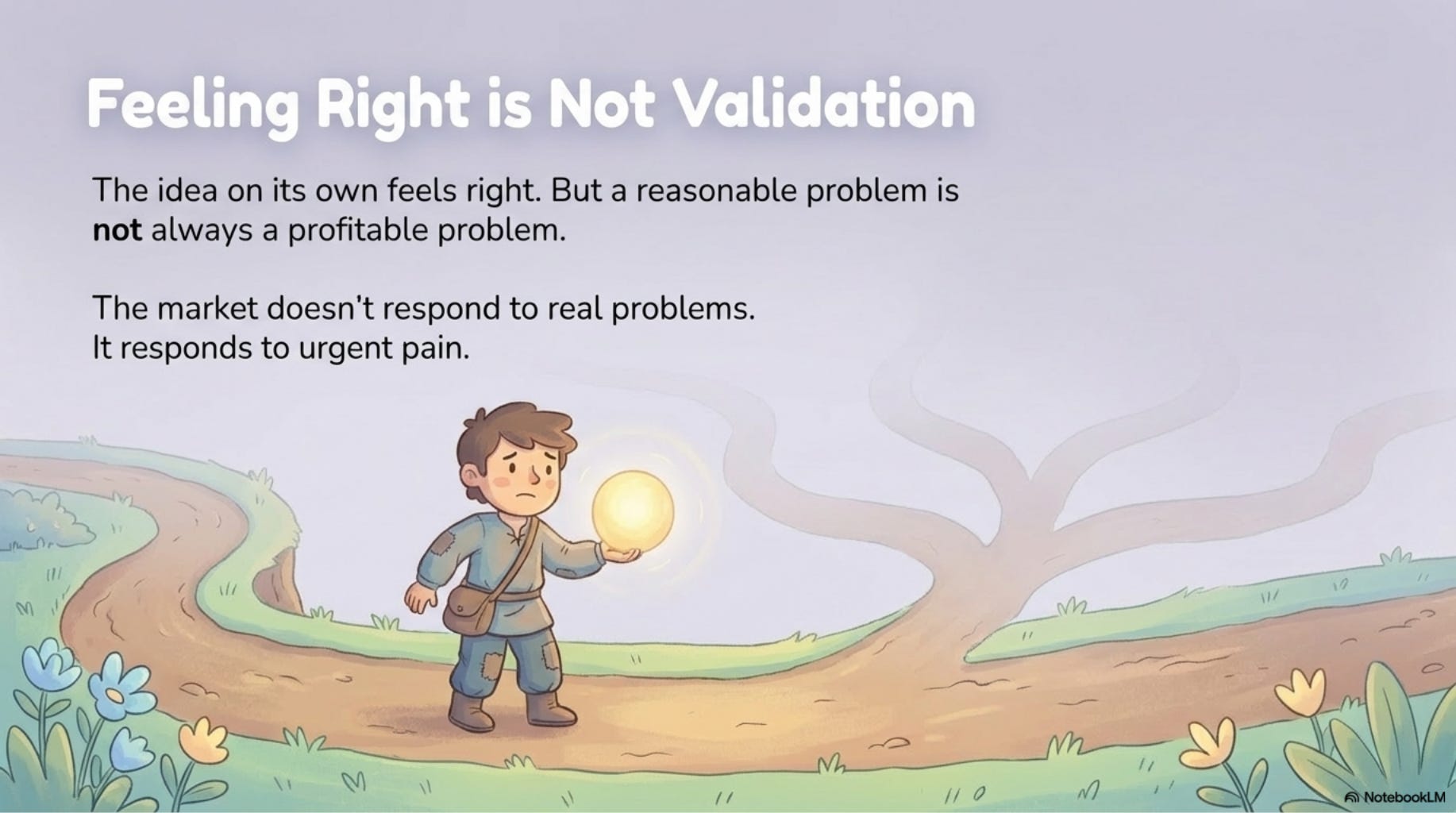
Because the idea in its own feels right.
And feeling right is not the same as being validated.
Let me explain.
The Reality Check.
What is The Reality Check
Let’s define it clearly.
The Reality Check is that stage where you validate whether the problem
That you’re trying to solve is painful and urgent enough to build a digital product around.
Not whether it’s interesting.
Not whether it’s clever.
Not whether it “makes sense.”
But whether people are willing to pay you money to solve this problem.
This step exists for a very important one reason:
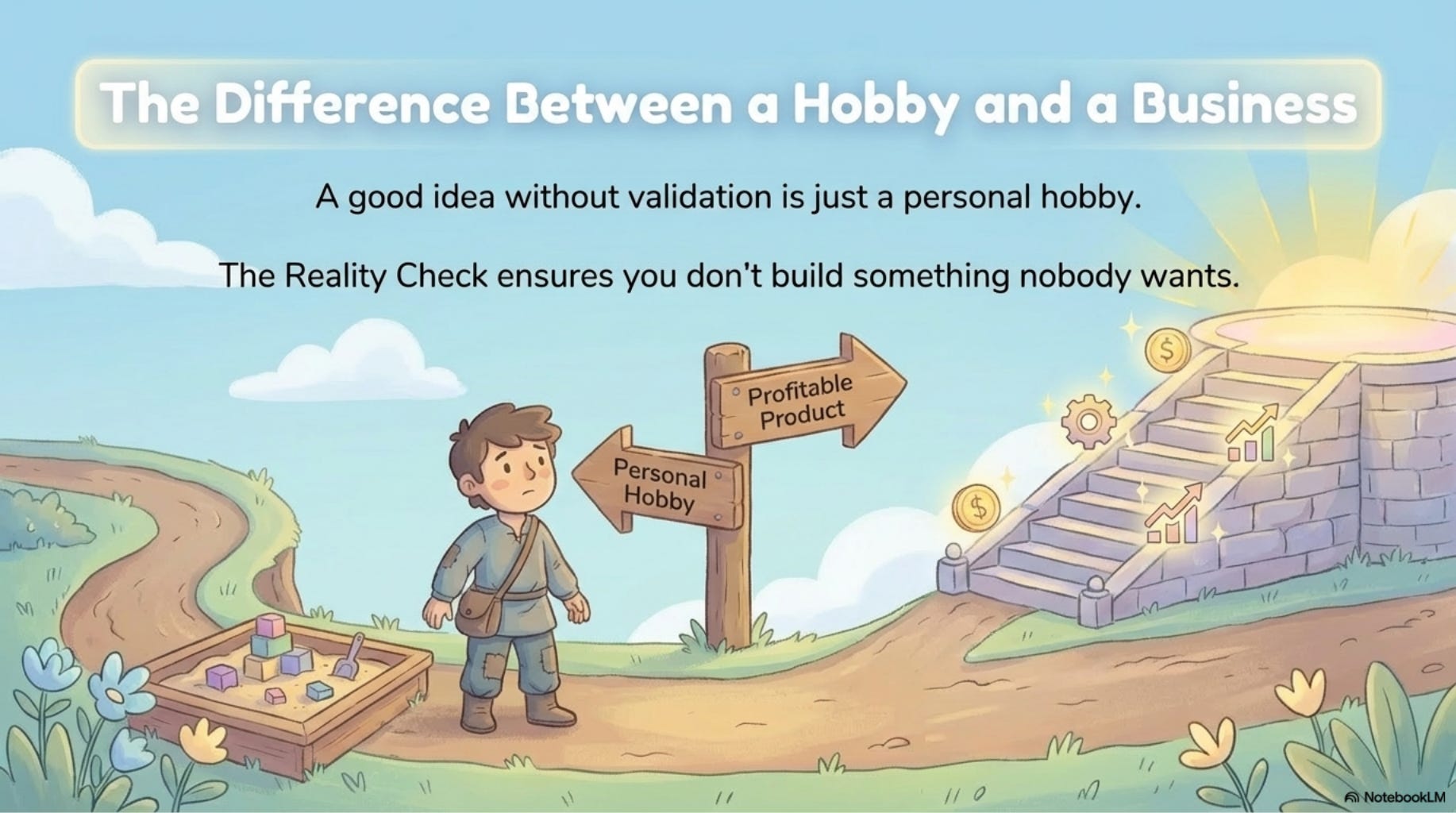
To ensure that you don’t build something that nobody wants.
Because this could be your biggest disaster
Causing your digital product to Fail
Skipping this step would lead you to building your Digital product in silence
Only for you to launch it into silence.
My Personal Mistake (And Why This Matters)
Let me share something that happened to me with you
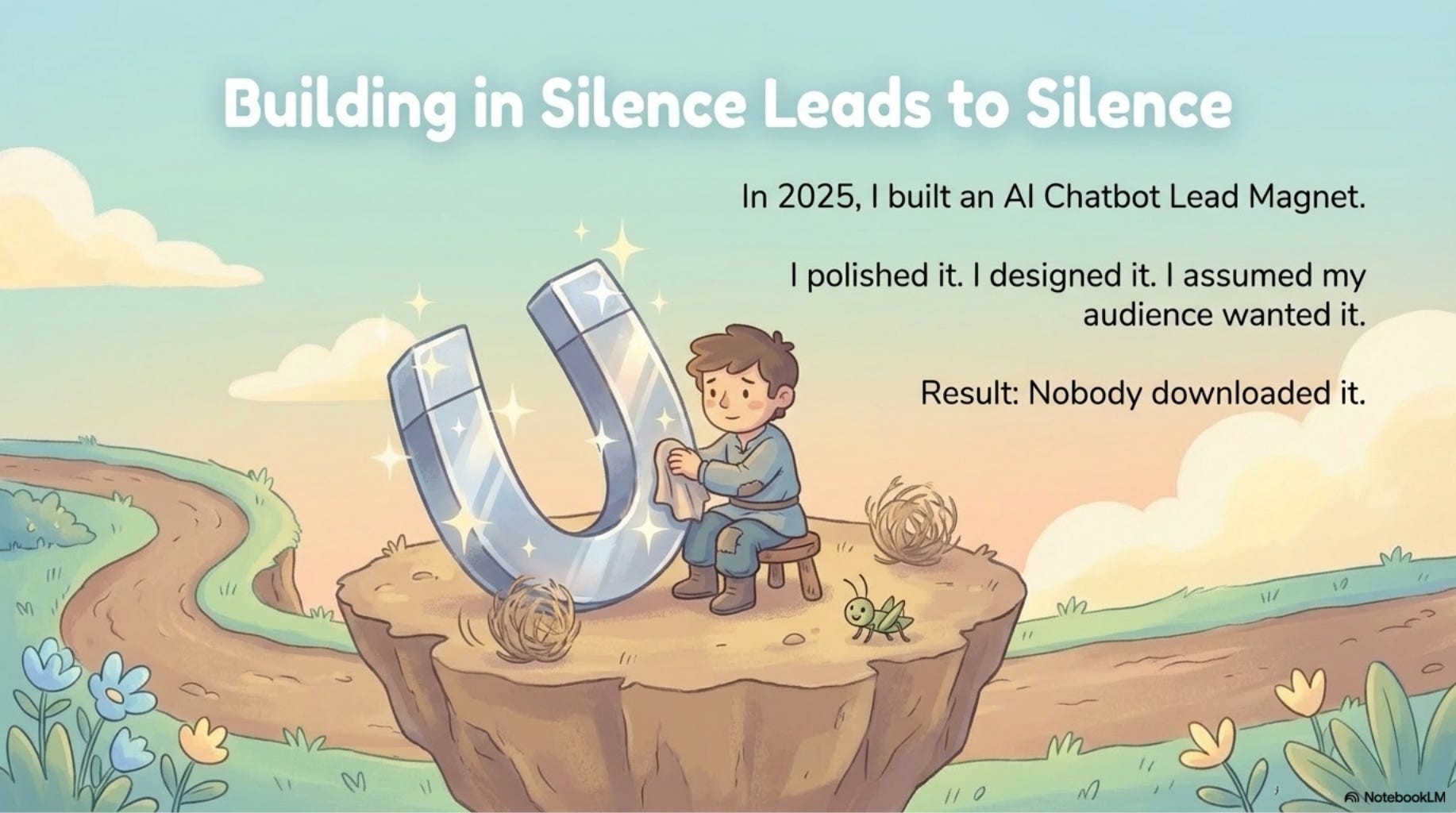
It was back in 2025 when I created my first Lead magnet.
Back when I was still offering “Ai chatbot creation” as a service
So I decided to create a lead magnet 🧲
You know something to help me market my Service more easily.
Then I thought to myself:
What If I get to create something valuable around my service How to create a Chatbot?
This will help me attract the right people.”
So I did exactly that
I built a lead magnet (How to create Lead Magnets)
🤦🏼🤦🏼
I Polished it.
I Designed it.
I Spent countless time refining it.
I didn’t even bother to validate that Idea.
I didn’t check if this was something my audience actually wanted.
I only assumed they would want it.
And then I created it
Then the result was this
Nobody downloaded it.
No one even cared enough to give it a try
Not because it was a bad digital product
But because it wasn’t solving any urgent problem for them.
This experience taught me something important:
A good idea without validation is just as good as a personal Hobby.
And personal Hobbies don’t guarantee profitable products.
Why Most Good Ideas Die Quietly
After Problem Extraction, most people stop at:
“This is a real problem.”
But here is the thing
the market doesn’t respond to real problems.
It responds to urgent pain.
There’s a difference.
A problem can be reasonable…
but not strong enough to trigger action.
Reality Check answers one quiet but critical question:
Is this a real, urgent problem or just a reasonable one?
this simple question changes everything.
Why Most Service Providers Skip This Step
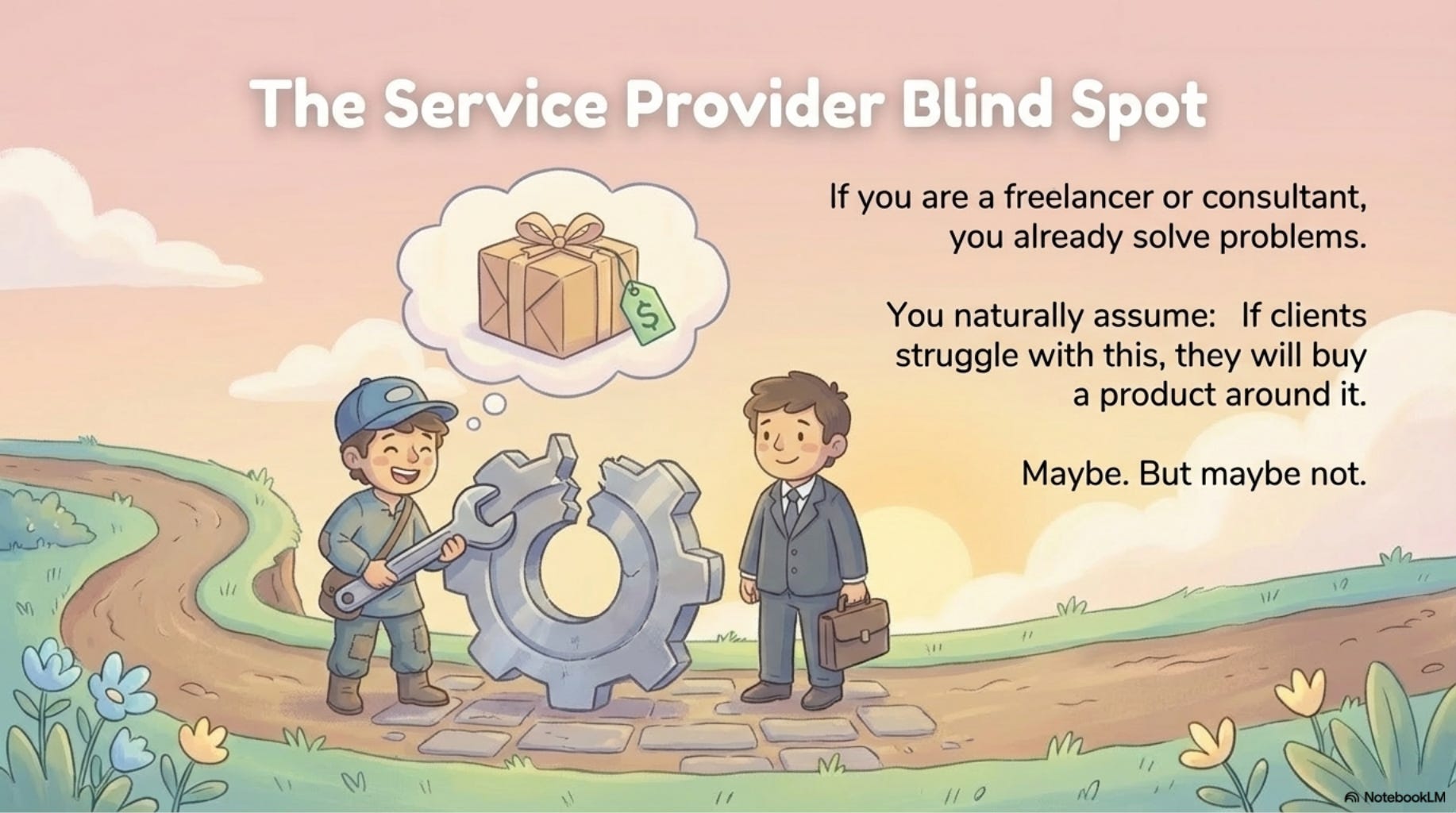
If you’re a freelancer, consultant, or a service provider, here’s why you’re at risk.
You already solve problems.
You already get paid.
So you assume:
“If my clients struggle with this,
surely they will buy a product around it.”
Maybe.
But maybe not.
Because service buyers and product buyers don’t always behave the same way.
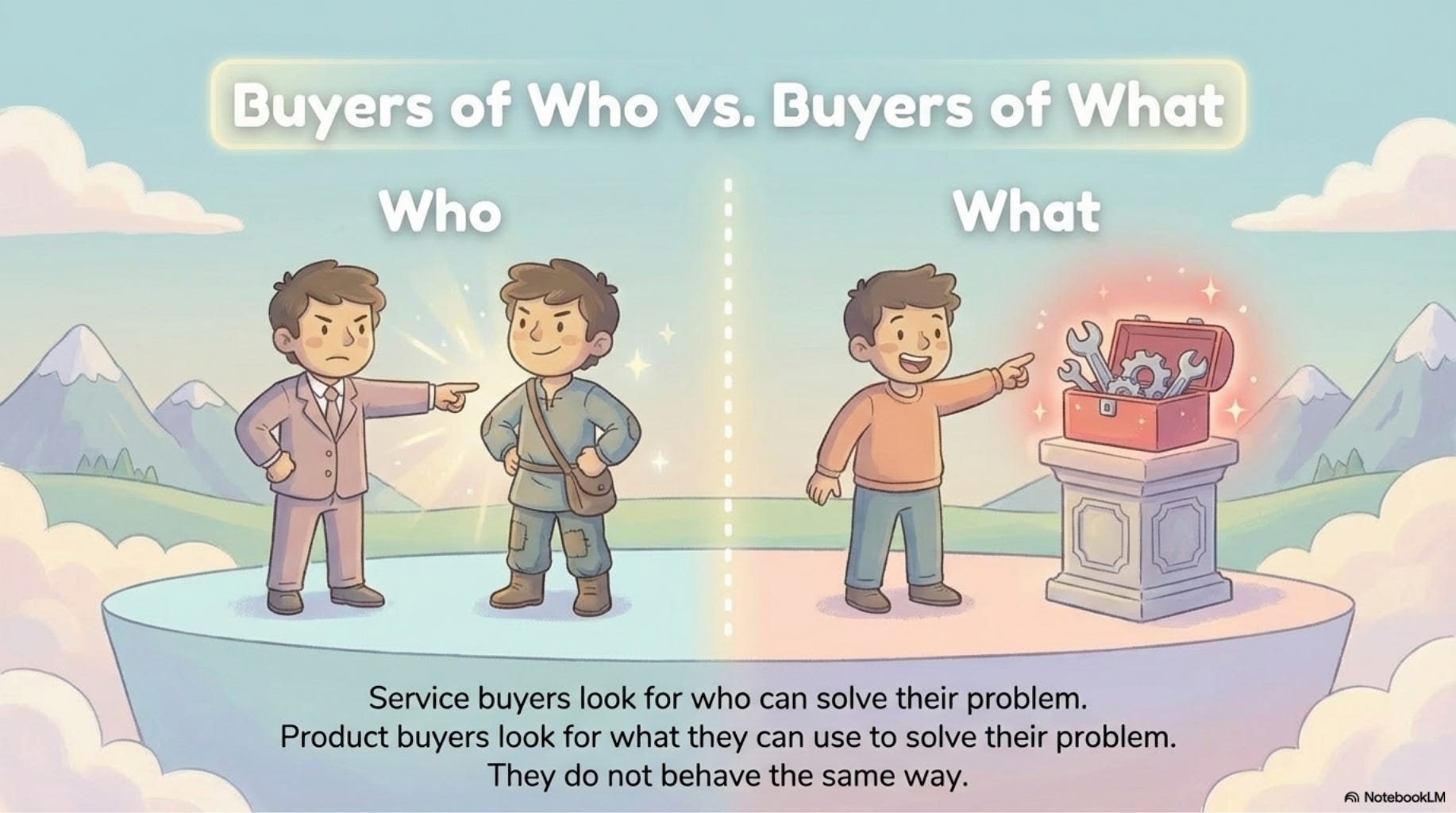
Service buyers are looking for “who can solve their problem”
Product buyers are looking for “what they can use to solve their problem”
That’s where Reality Check Comes in
It removes your ego from the way.
It helps you remove assumption and fantasy
And that makes a lot of people uncomfortable.
Because once you ask:
Are people already paying to solve this?
Is this problem recurring?
Is it urgent enough to prioritize?
Does it cost time, money, stress, or momentum?
You risk hearing an answer you don’t like.
So many creators avoid this step by:
Building in Isolation.
Calling it preparation
Polishing your product endlessly
Researching over and over again
But here is the Truth skipping Reality Check doesn’t protect your confidence.
It only delays your clarity.
The 3 Signals the Market Always Leaves Behind
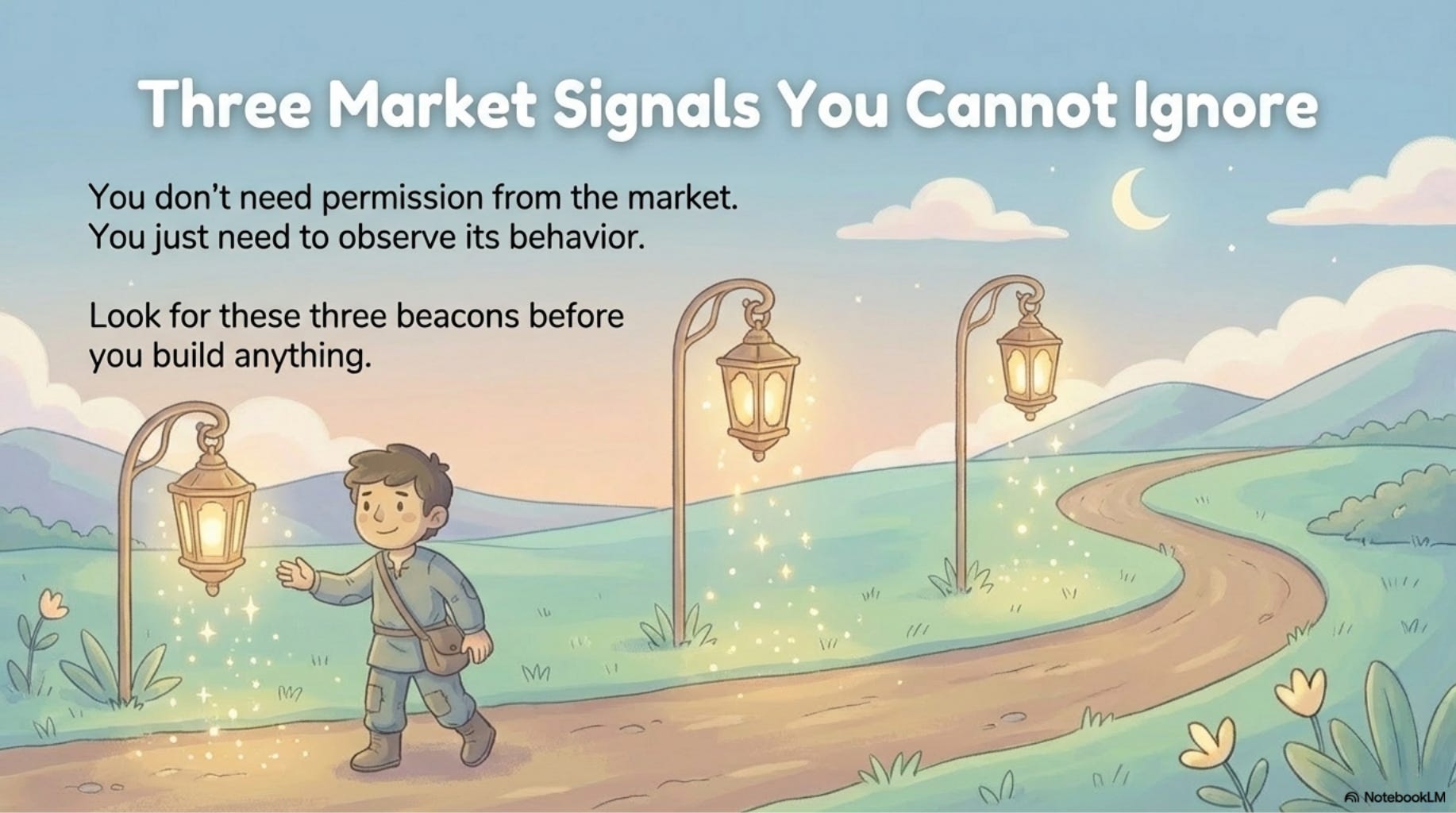
Here’s the good news:
You don’t need permission from the market.
You just need to observe the Market behavior.
There are three signals I look out for
before I build anything.
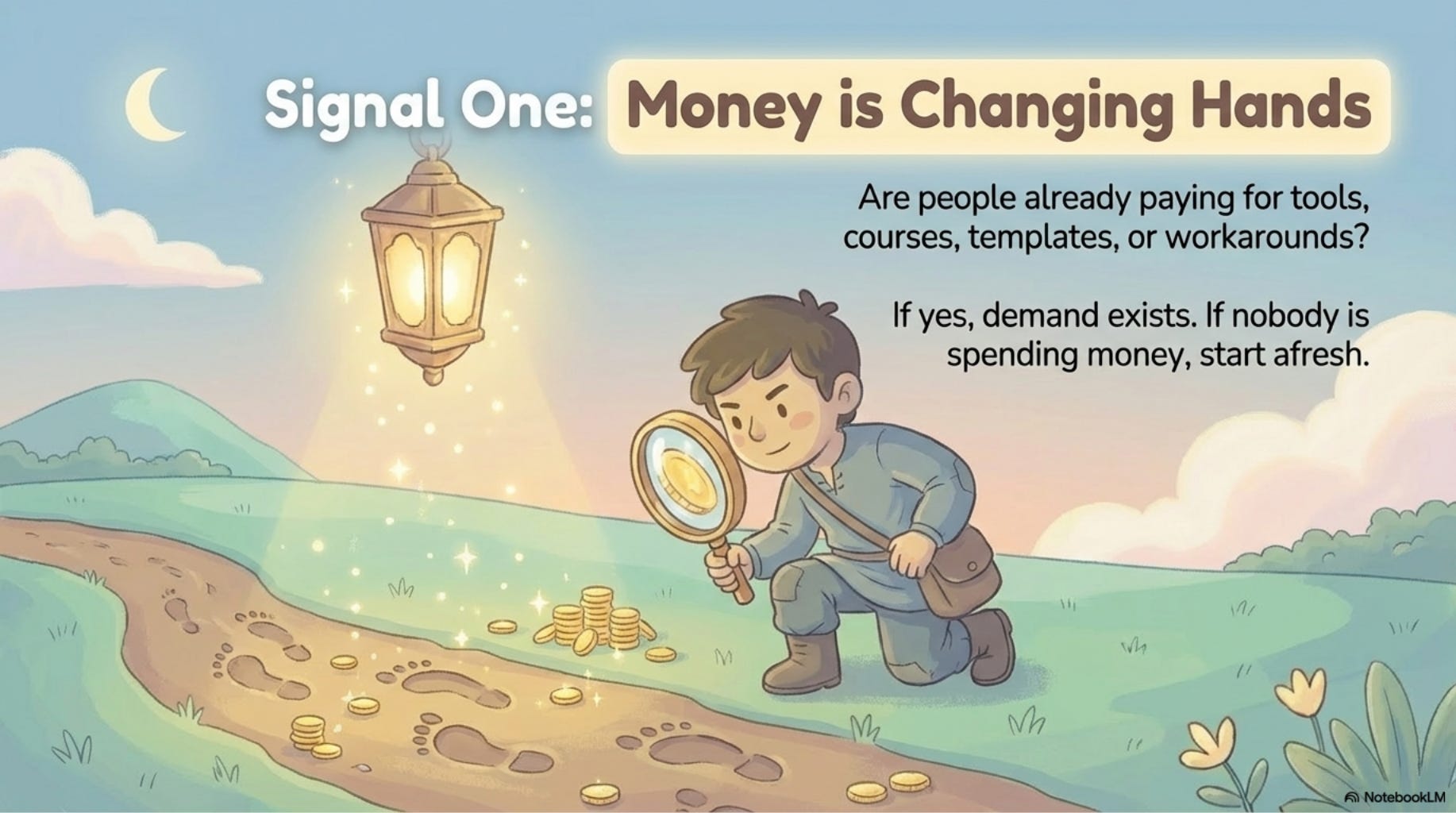
Is Money Already Being Exchanged
This is the strongest signal.
Are people already paying for:
Tools?
Courses?
Templates?
Workarounds?
that help in solving this problem
If your answer is “yes” then the problem is a real one.
You’re not just proving that demand exists.
You’re proving that it exists for you to enter.
If nobody is spending money to solve that problem
That’s a Clear warning sign to start afresh.
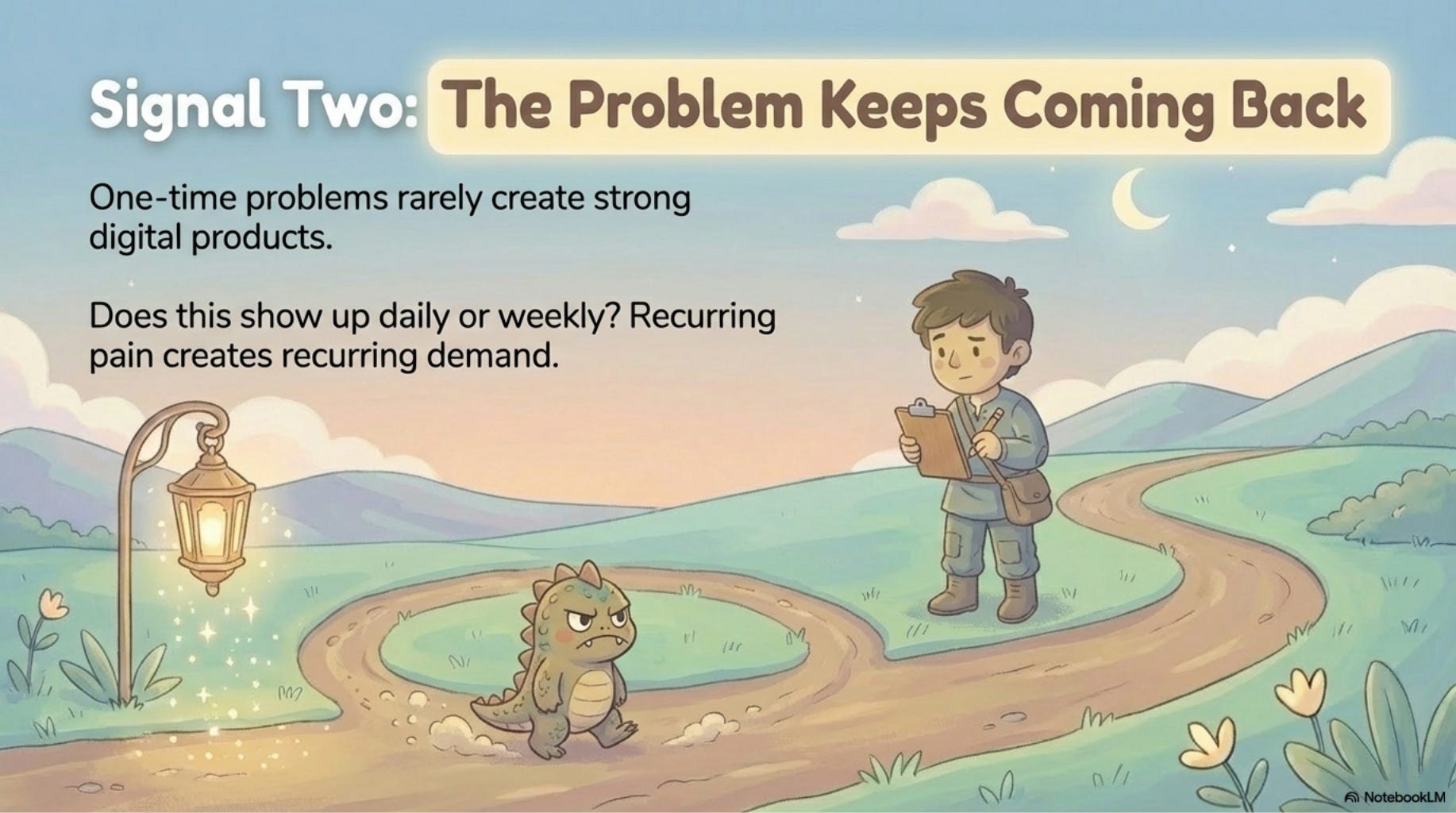
Is this a Problem that Keeps Coming Back
One-time problems rarely create strong digital products.
But Recurring problems are good at creating digital products.
Ask yourself:
Does this problem show up daily or weekly
Do clients repeatedly complain about this?
Does solving it once fully eliminate it?
Remember Recurring pain creates recurring demand.
If it’s a one-off problem
Then it’s not a good digital product idea.
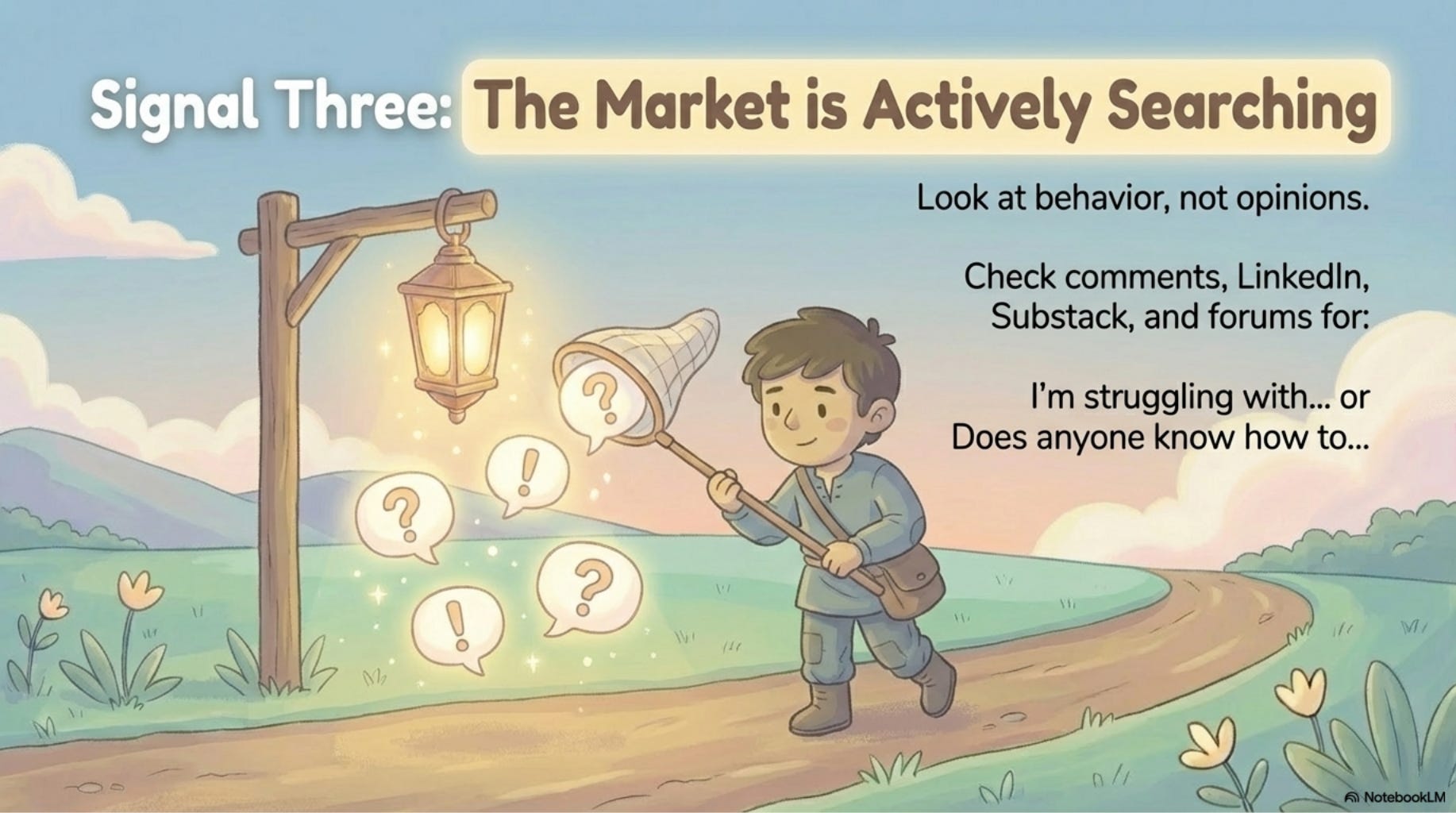
Are People Are Actively Searching for a Relief to this problem
Look at their current behaviors,
not their opinions.
Look at:
Comment sections
LinkedIn posts
Substack replies
Tweets
Questions in communities
Do you see statements like:
“I’m struggling with…”
“Does anyone know how to…”
“This is exactly my problem.”
When people are already searching for a solution to a problem
you don’t need to convince them to buy
You just need to position your digital product as the solution that they need to solve their problem.
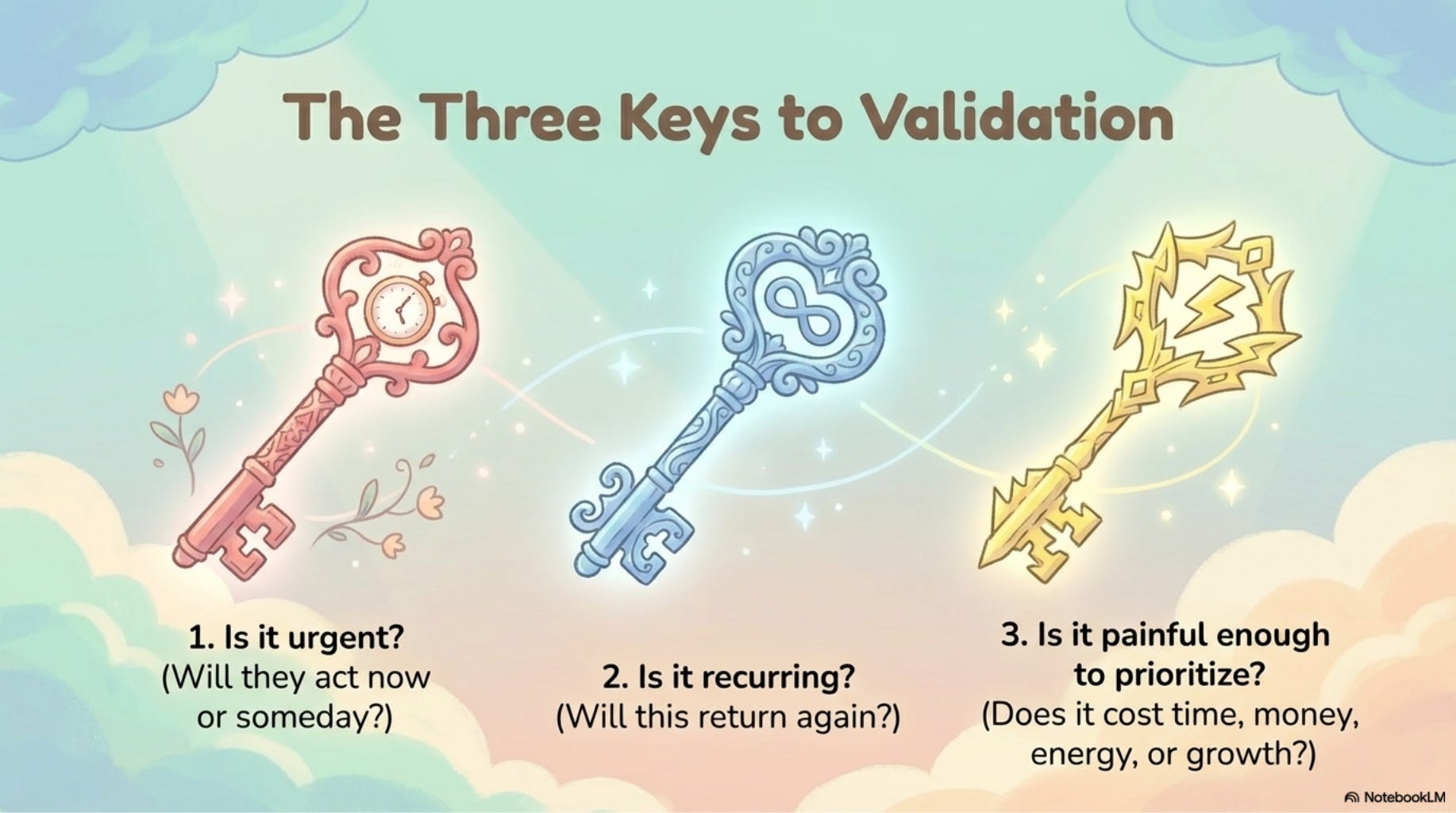
The Three Reality Check Questions
Now let’s simplify this.
Before you build anything, ask yourself:
Is this an urgent problem? Will they act now or someday?
Is this a recurring problem? Will this problem return again?
Is it painful enough to prioritize? Does it cost them time, money, energy, or growth?
If the answer is to all three…
Is NO
The that idea stays an idea.
No guilt.
No attachment.
Just raw evidence.
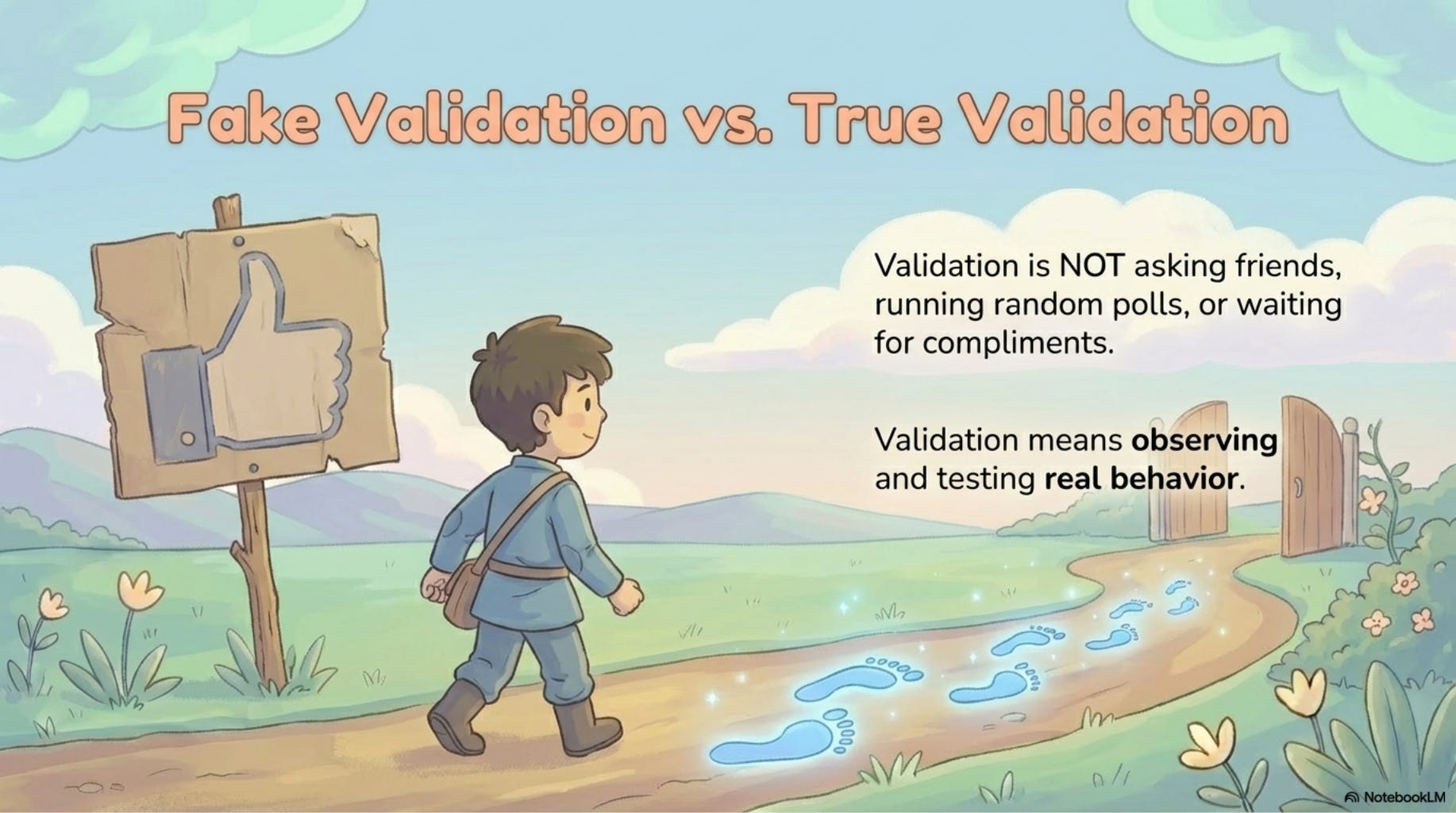
What Validation Actually Means
Let’s be practical now.
Validation does NOT mean:
Asking your friends if they like your product
Running a random poll
Posting “Would you buy this?”
And Wait for compliments
Validation means observing behavior.
Or even better:
Testing small behavior.
For example:
Talking about the problem consistently and watching engagement
Offering a small beta solution
Inviting people to join a waitlist
Pre-selling before building fully
If nobody responds to what you’re saying
That’s raw data.
And that data is better than disappointment after six weeks of building.
Your Reality Check Assignment
Here’s what I want you to do before moving to Step 3 (Output).
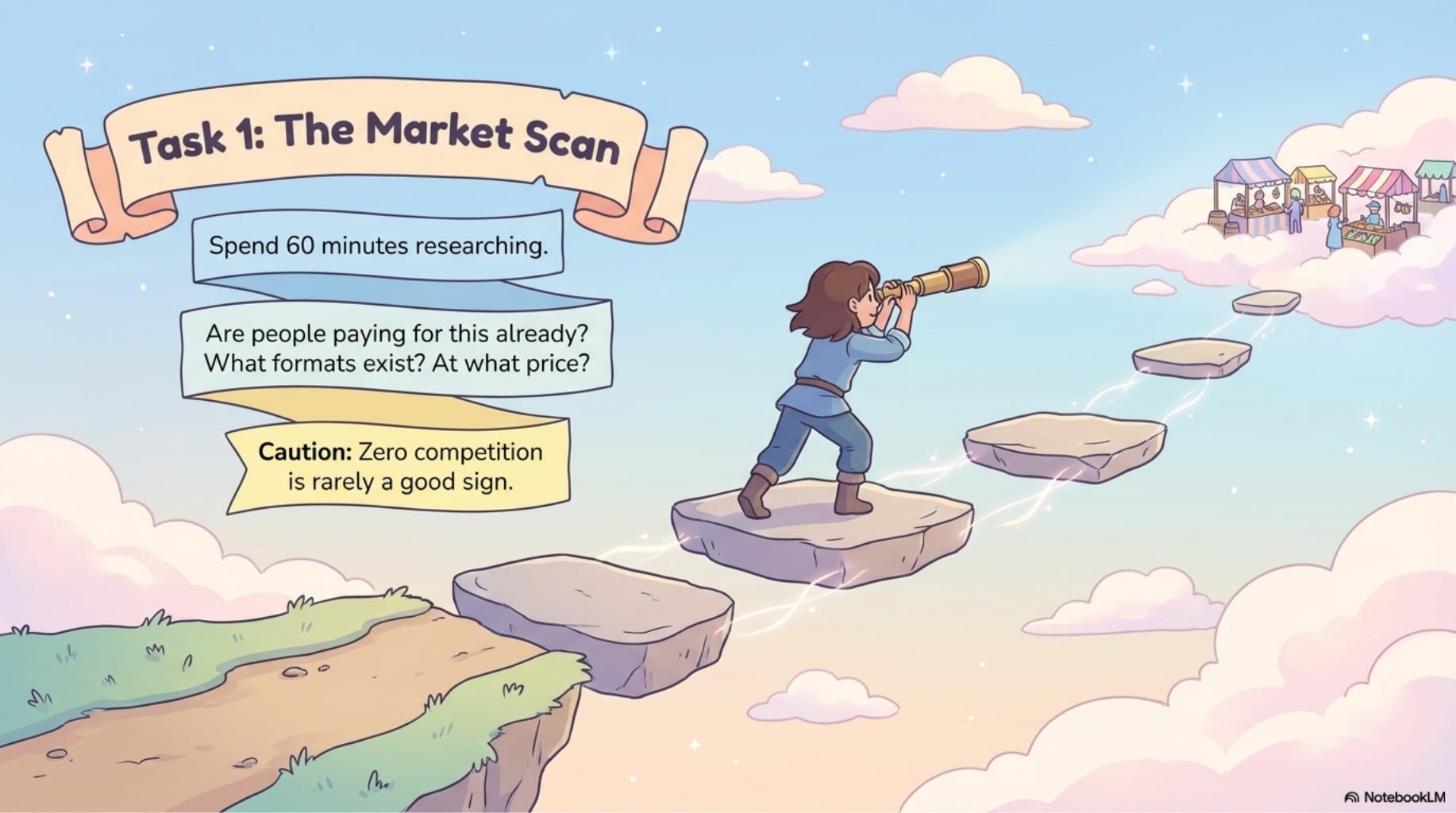
1: Market Scan
Spend 60 minutes researching:
Are people paying for this already?
What formats exist?
What price points?
How are they positioned?
If nothing exists at all
Be cautious.
No competition is rarely a good sign.
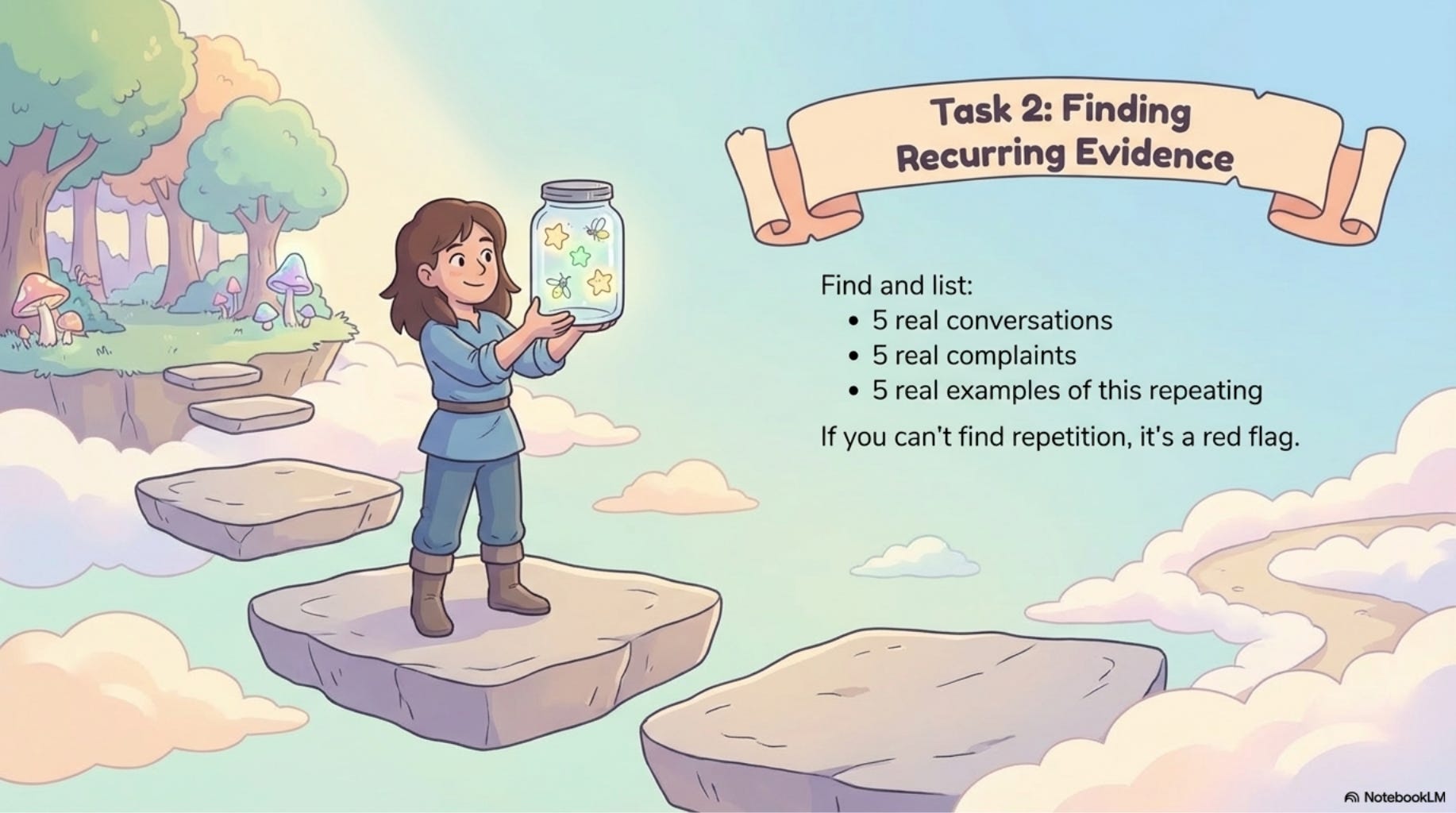
2: Recurring Evidence
List:
5 real conversations
5 real complaints
5 real examples of this problem repeating
If you can’t find repetition
That’s a Red Flag
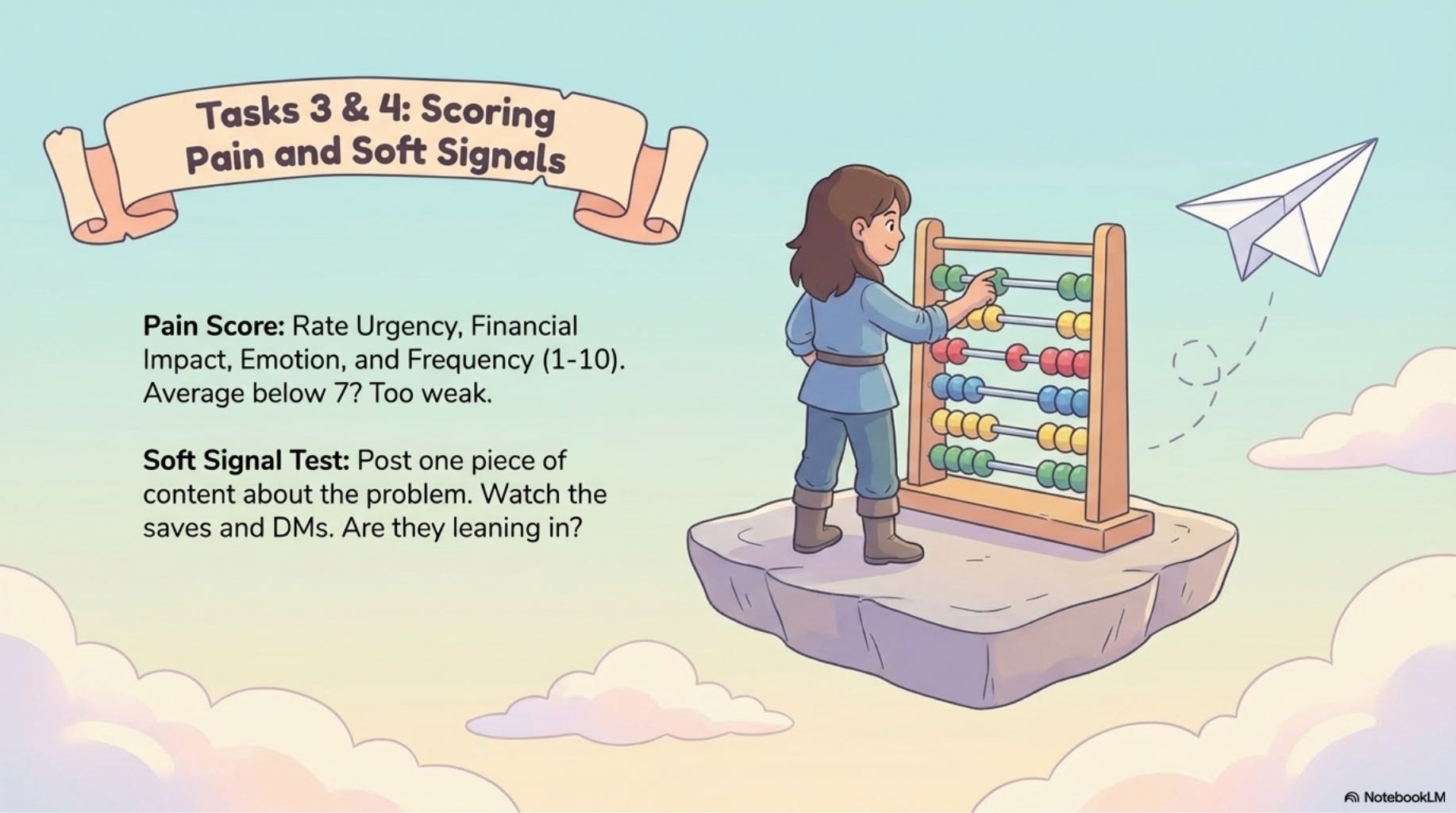
3: Pain Score
Rate the problem on a scale of 1–10 on:
Urgency
Financial impact
Emotional frustration
Frequency
If the average for most is below 7
Then it might not be a strong enough problem.
4 Soft Signal Test (Optional but Powerful)
Create one piece of content around the problem.
Watch:
Comments
Saves
DMs
Replies
Are people leaning in?
Or just scrolling past?
People’s Behavior will always tell you the truth.
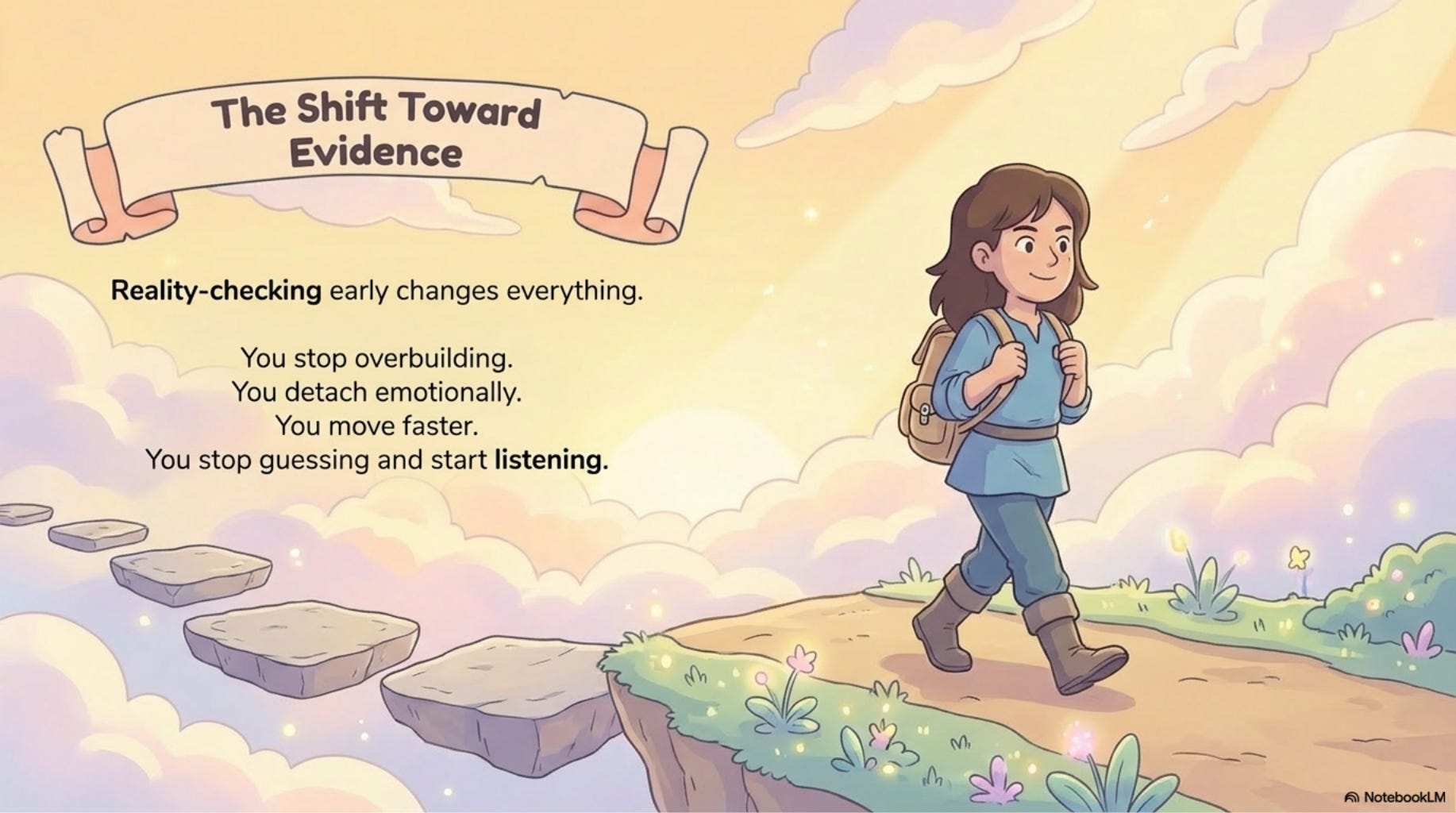
The Shift That Changes Everything
Once I started reality-checking early:
I stopped overbuilding.
I detached emotionally.
I moved faster.
I wasted less time.
Because I wasn’t guessing anymore.
Instead I was listening more.
The Reality Check doesn’t kill ideas.
It protects you from building something that no one wants
Transition to Step 3 Output (MVP)
Now here’s the beautiful part.
Once you pass the Reality Check
Once you see evidence confirm urgency
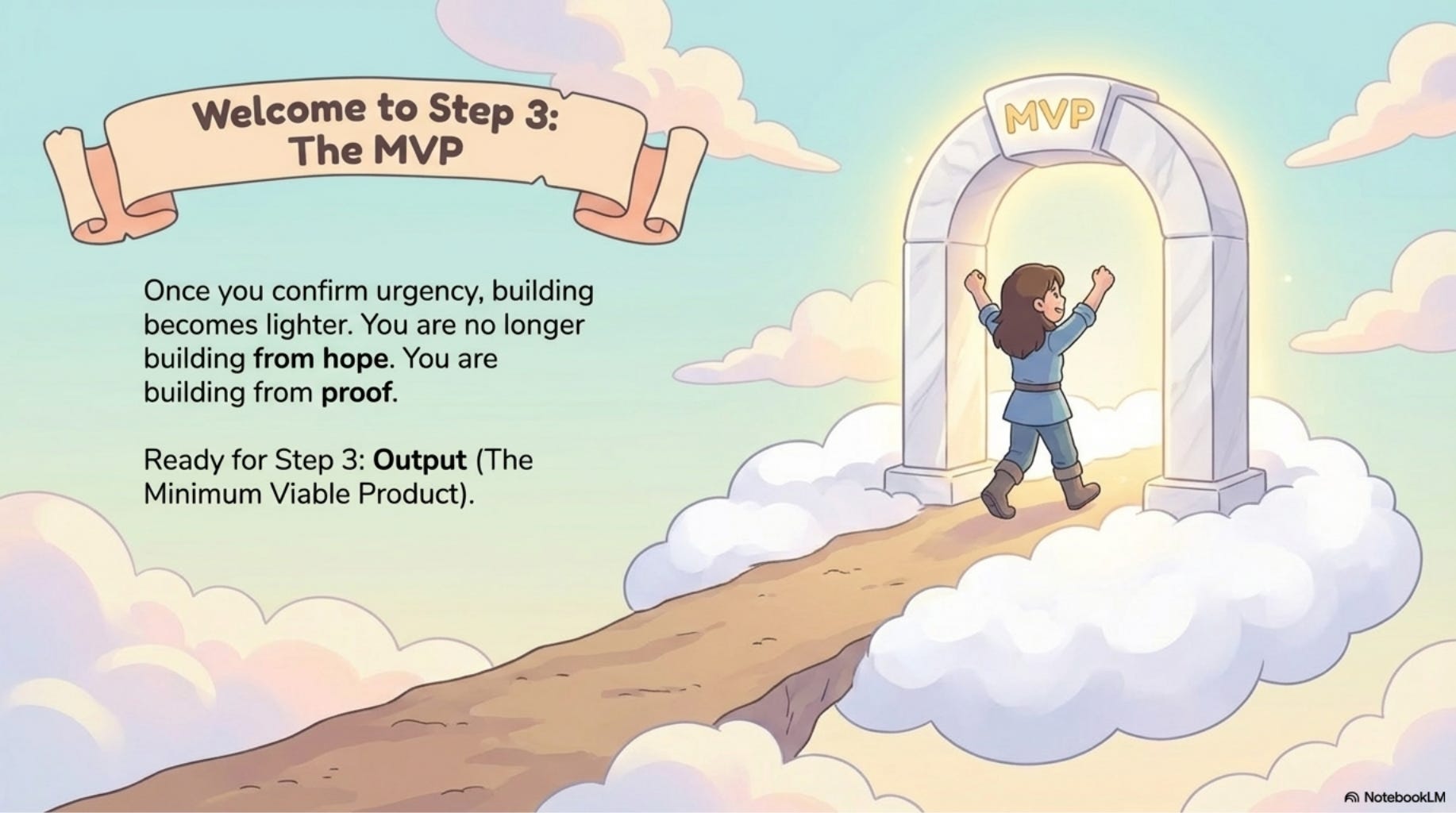
Building becomes lighter.
Because now you’re not building from hope.
You’re building from proof.
And that leads us to Step 3 of the PROOF Framework:
Output.
Where we build the smallest possible version of your product.
Not the full masterpiece.
Not the perfect system.
Just the Minimum Viable Product.
But only after the Reality Check.
Closing
Most people don’t fail because their ideas are bad.
They fail because they never asked:
Is this problem strong enough to carry a product?
Confidence in product creation is not emotional.
It’s earned through evidence.
Do the Reality Check properly.
Then we can start building.