Step 3: Output (MVP Creation)

Opening
This is the part that we have all been waiting for the part that comes after the Reality Check.
Now that you’ve successfully identified a real problem.
You’ve confirmed that people are already paying to solve this problem.
You’ve done your homework.
And now you are ready to start Building
All your doubts have faded away.
And has been replaced with a different feeling
It feels like confidence.
It feels like clarity.
It feels like:
“This is real. Now let me do this properly.”
And that’s exactly what you should be looking out for.
Why “Doing It Properly” Is not the right thing to do
I know what this feels like
Because I have had a experienced it firsthand
Back in 2025, after my chatbot service failed,
I made a personal decision.
I was going to create my digital product the right way.
I had done the extraction.
I had done the reality check.
I had a real problem I understood deeply.
So I sat down to build.
And immediately, my brain said:
“If you’re going to do this, you better do it properly.”
So I started adding more.
More pages.
More sections.
More explanations.
More polishing
More delay
It felt like more responsibility.
It felt like I was being thorough.
But two weeks passed and I still wasn’t done.
Then three weeks.
Still not done.
The product kept on getting bigger and bigger
And the finish line kept on moving further away
It got to a point where I could not just continue
That was when it downed on me
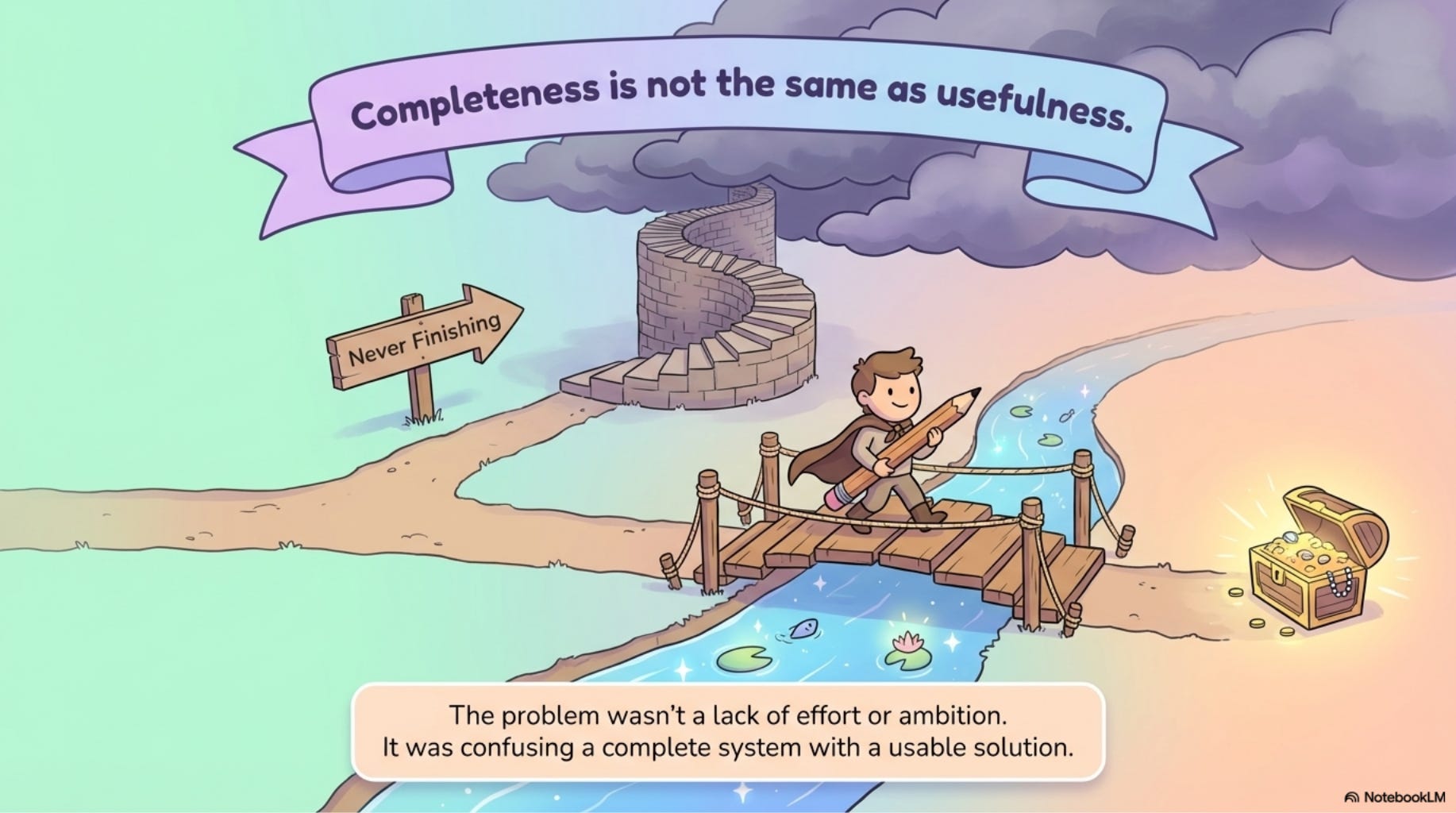
The problem wasn’t my lack of effort.
It wasn’t even my ambition.
The main problem was that I had confused completeness with usefulness.
And those two things are not the same.
What Output Actually Means Inside the PROOF Framework
Let’s define it clearly.
Output is the third step of the PROOF Framework.
And it has one job:
To help you
Turn your validated problem into a simple but usable product.
Not a perfect product.
Not a complete system.
Not something designed to impress people.
Just something that works.
And by the end of this step,
you should be able to create what we call a Minimum Viable Product.
An MVP.
And before we go any further, let me clear up the biggest misunderstanding about what an MVP actually is.
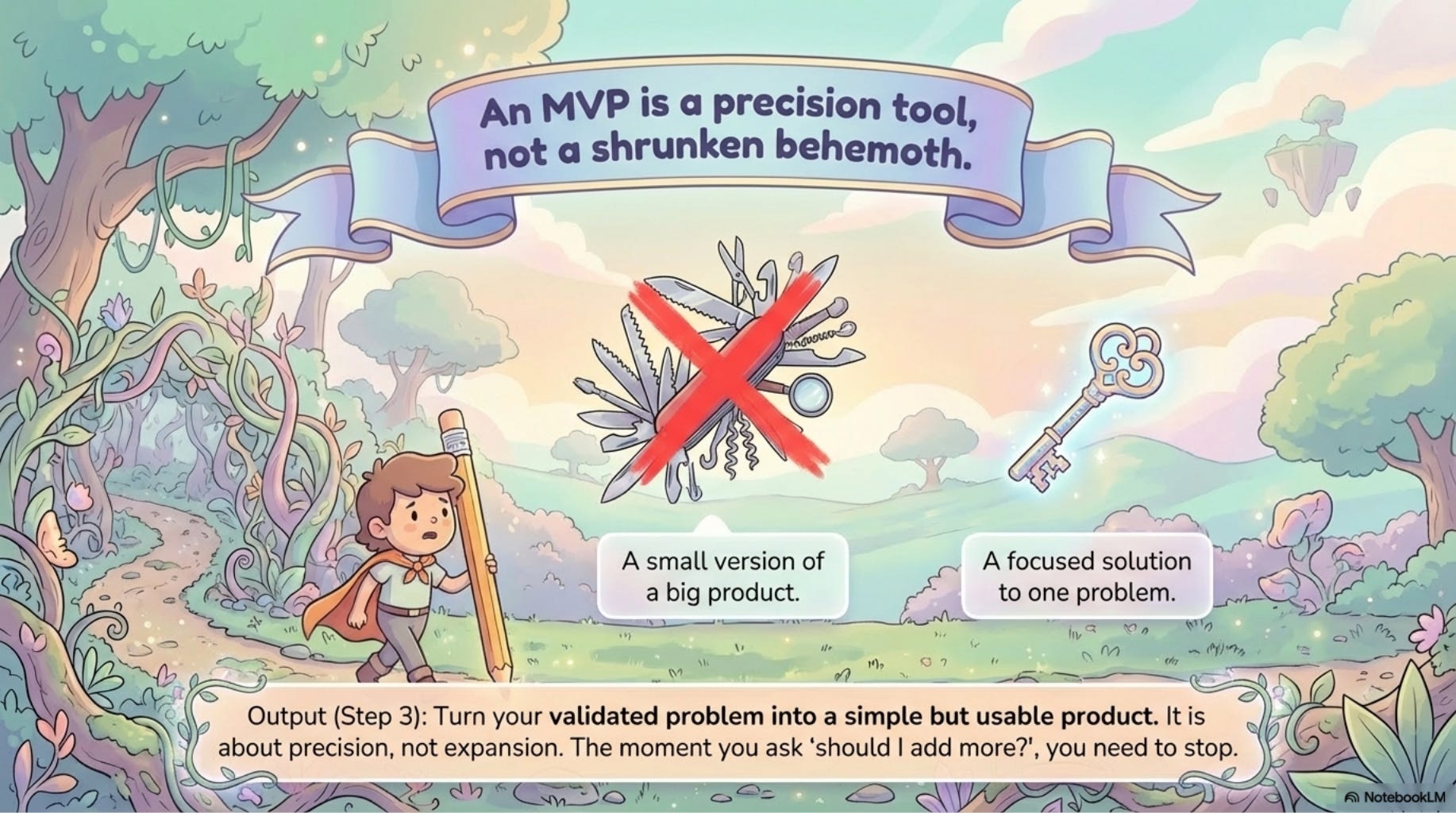
Most people think it means:
“A small version of a big product.”
But that’s not it.
An MVP is a focused solution to one specific problem, delivered in the simplest possible way.
That’s it.
Nothing more.
Nothing Less.
What Output Is NOT
Let me remove the pressure for you.
Output does not mean:
Building the final version of your product
Covering everything you know about the topic
Proving how smart or detailed you are
Creating something to impress people
Output is about precision, not expansion.
The moment you start asking yourself
“should I add more?”
That’s exactly the moment you need to stop.
The 4 Core Principles of Output
This is where most of your leverage comes from as a ghostwriter or service provider building your first digital product.
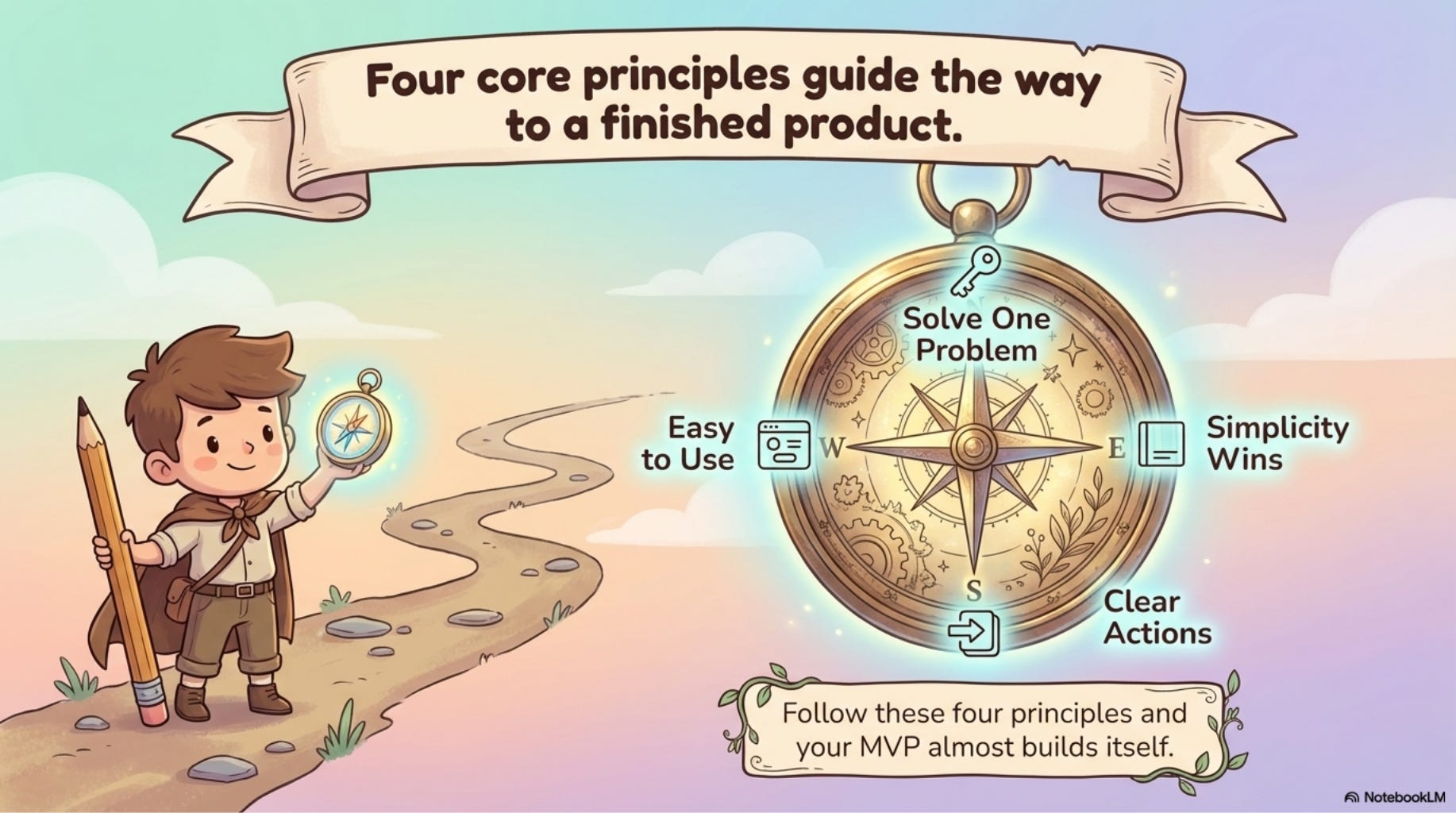
Follow these four principles and the MVP almost builds itself.
Principle 1: Solve One Problem Clearly and Effectively
Your product should not try to do everything.
It should do only one thing and do it well.
Not:
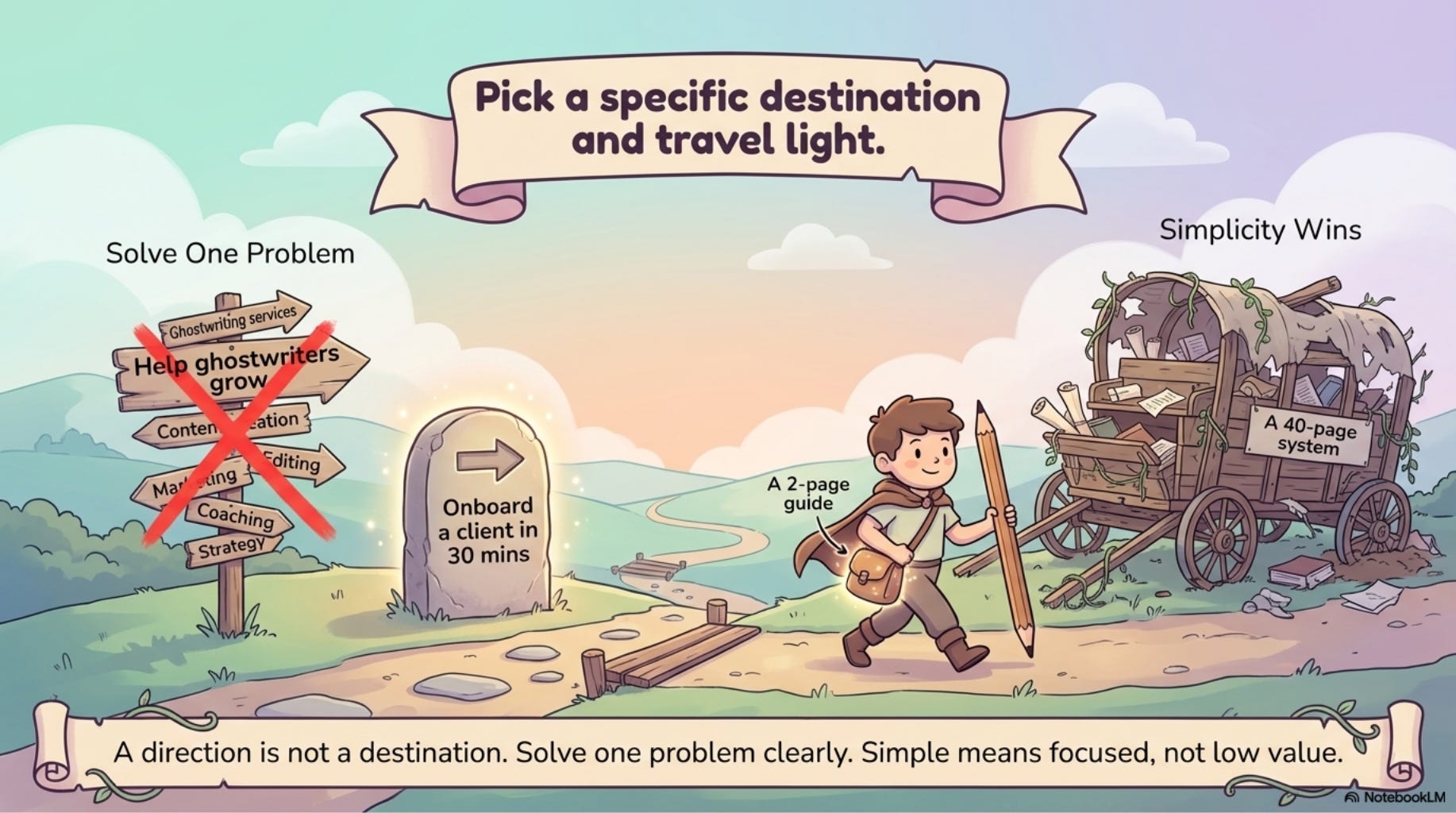
“Help ghostwriters grow their freelance business.”
But:
“Help ghostwriters onboard a new client in under 30 minutes.”
See the difference?
The first one is a direction.
The second one is a destination.
Clarity makes your product easier to build, easier to explain, and easier to use.
When you try to solve three problems at once, you end up solving none of them properly.
Pick one problem.
And solve it.
Principle 2: Simplicity Wins
Your MVP should be simple enough to build out quickly.
If it’s taking months, you’ve already gone too far.
Speed matters at this stage because:
You need to reduce overthinking
You need to get real feedback faster
You need to avoid building features nobody asked for
And here is something most people don’t even realize :
Simple doesn’t mean low value.
Simple means focused.
A two-page guide that solves one painful problem is worth more to your buyer than a 40-page system that solves five problems loosely.
Principle 3: Turn Your Solution Into Clear Actions
A good product doesn’t just explain things.
It guides people.
Ask yourself:
“Can someone use this and actually get a desired result?”
Your solution needs to be broken down into steps,
actions,
and instructions
so that the user knows exactly what to do next.
Not just what to think about.
What to do.
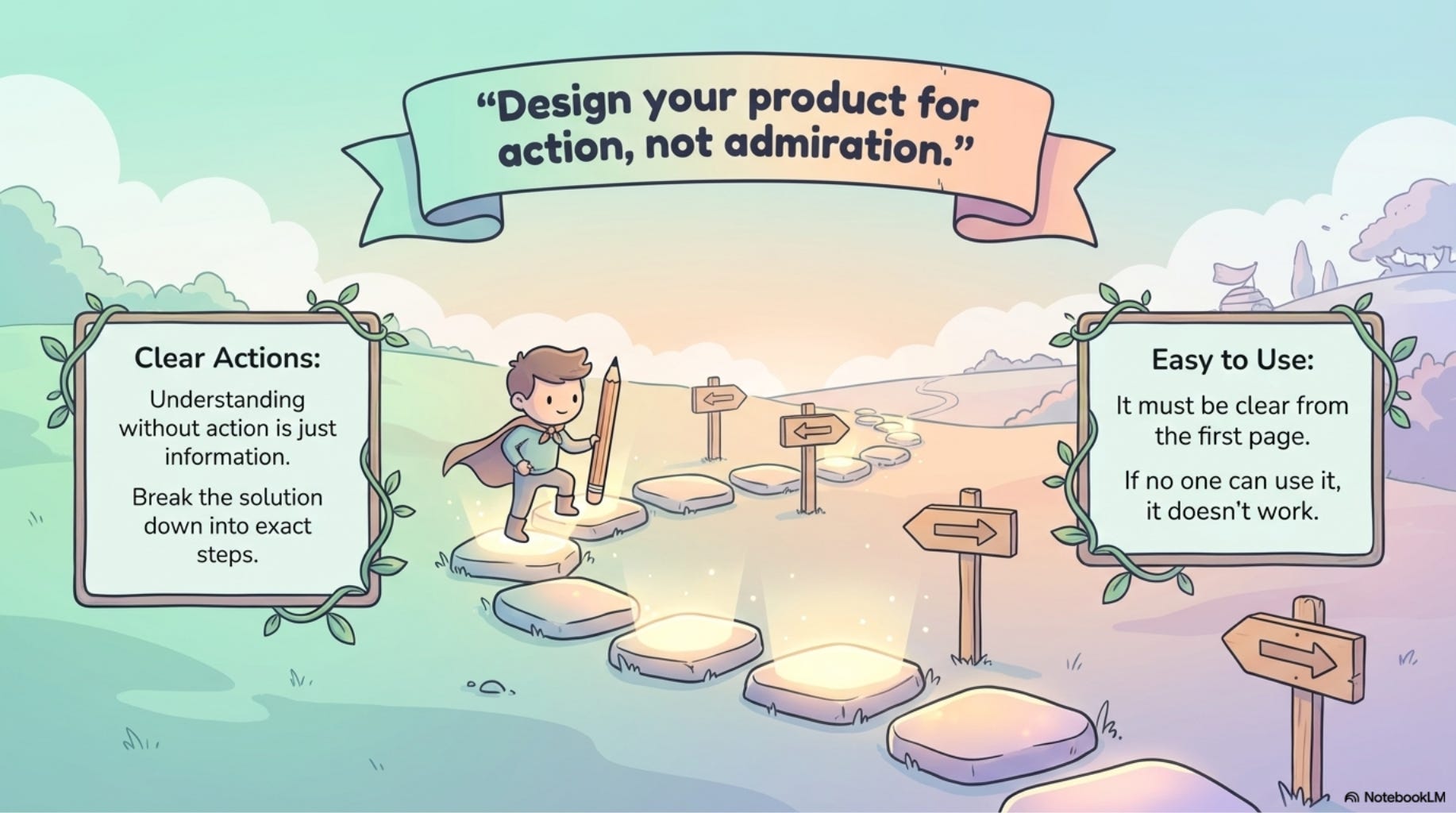
Because understanding without action is just information.
And information alone doesn’t solve problems.
Principle 4: Make It Easy to Use and Implement
Even a great idea can fail if it’s hard to use.
Your MVP should feel:
Clear from the first page
Structured so the user never feels lost
Easy to follow without needing extra explanation from you
Because here’s the truth about digital products:
If no one can use it, then it doesn’t work.
It doesn’t matter how good it looks sitting in their downloads folder.
It only works when they open it, follow it, and get a result.
Design for action, not admiration.
The Mistakes That Kills Products
Most ghostwriters fail at this step
Not because they have bad ideas.
They fail because of how they build.
Here are the three patterns I see most often.
Overbuilding
You start with one clean idea.
Then somewhere in the process it becomes a course, a system, a community, and a toolkit.
All from one product.
The result?
Nothing gets finished.
And the longer you spend building,
the harder it becomes to let go of what you’ve already created.
Build small on purpose
It’s an MVP not the Final Version.
Overpolishing
You keep tweaking.
Rewriting.
Adjusting.
Waiting for it to feel ready.
But perfection is a moving target.
And it moves every time you get close to it.
Most people never ship because of this.
Not because they’re lazy.
Because they’re waiting for a feeling that never fully arrives.
Ship before it’s perfect.
Getting Feedback will tell you what actually needs fixing.
Focusing on Design Over Solution
Spending hours obsessing on how your product looks,
how it’s packaged,
how it’s presented.
Instead of asking the only question that matters:
“Does this actually solve any problem?”
A clean solution will always outperform a beautiful distraction.
Every time.
What Your MVP Should Actually Look Like
At this stage, your product should be simple and practical.
For most ghostwriters just starting out,
It should look like:
A template
A mini guide
A checklist
A simple framework
Not a full course.
Not a complex multi-module system.
Just something that helps someone take action immediately after they download it.
The 4 Filters I Use Before Building Anything
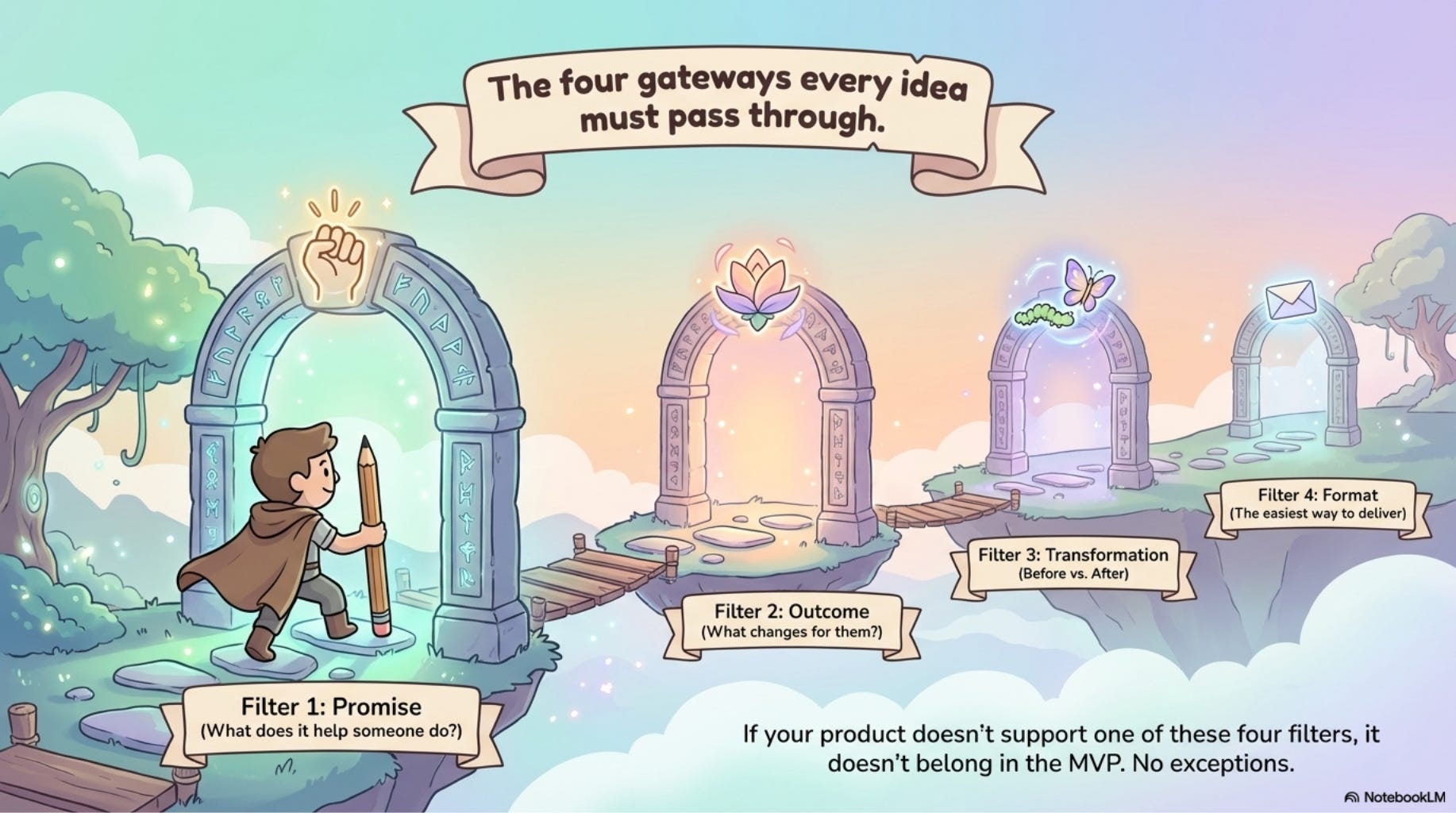
When I sit down to build an MVP now, I run the idea through four filters first.
These four questions have saved me from overbuilding more times than I can count.
Filter 1: What is the single promise? What does this product help someone do?
Filter 2: What is the outcome? What changes for them after they use it?
Filter 3: What is the transformation? Where are they before? Where are they after?
Filter 4: What is the simplest format? What’s the easiest way to deliver this outcome?
If your product doesn’t support one of these four filters, it doesn’t belong in the MVP.
No exceptions.
Real-Life MVP Examples for Ghostwriters
Let me make this as practical as possible.
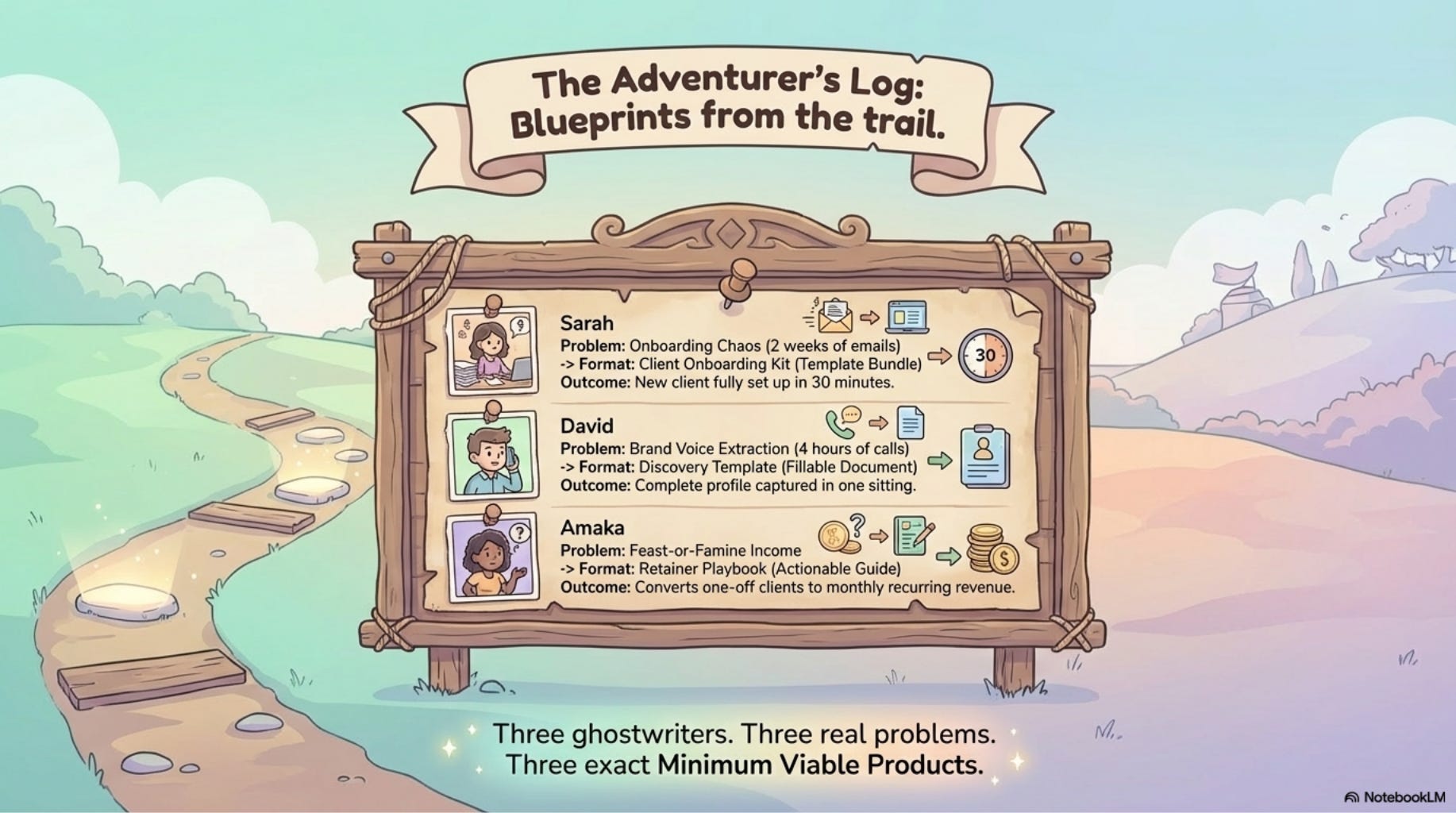
Here are three ghostwriters, three real problems, and three MVPs they could build right now.
Example 1 — Sarah: The Onboarding Chaos Problem
Sarah is a ghostwriter who writes long-form content for B2B founders.
Every time she lands a new client, the first two weeks are a disaster.
Back and forth emails.
Unclear briefs.
Missed expectations.
Revision after revision.
She has fixed this problem for herself over the past year.
She now has a tight onboarding process that gets a new client fully set up in under 30 minutes.
Her MVP:
A Client Onboarding Kit — a simple template bundle that includes a welcome document, a brand questionnaire, and a clear revision policy.
One problem: Chaotic onboarding that wastes time and damages first impressions.
One outcome: A new client fully onboarded in 30 minutes with zero back and forth.
One format: A downloadable template bundle.
Other ghostwriters who dread those first two weeks will recognize this problem and pay for that solution immediately.
Example 2 — David: The Brand Voice Extraction Problem
David ghostwrites LinkedIn content for startup founders.
His biggest time drain is the discovery phase.
Every new client takes 3 to 4 hours of calls and follow-up questions just to understand how they talk, what they believe in, and what kind of content feels authentic to them.
He has done this exact process 14 times.
He has it refined now.
His MVP:
A Brand Voice Discovery Template
a structured document the client fills in themselves, covering tone, vocabulary, core beliefs, content boundaries, and example posts they admire.
One problem: Hours lost trying to extract brand voice through long unstructured conversations.
One outcome: A complete brand voice profile captured in one sitting, without a single call.
One format: A fillable document.
Other ghostwriters burning hours on discovery calls will feel this problem in their chest the moment they read that description.
Example 3 — Amaka: The Feast-or-Famine Income Problem
Amaka is a ghostwriter who has been freelancing for two years.
She is good at her work.
Her clients are happy.
But her income is unpredictable.
Some months are great.
Other months are terrifying.
She realized the problem wasn’t her skill.
It was that she had no retainer structure.
No system for turning one-off clients into consistent monthly income.
She figured it out after months of trial and error.
Her MVP:
A Ghostwriter Retainer Playbook
a short, practical guide that walks a ghostwriter through how to pitch, structure, and price a monthly retainer offer to an existing client.
One problem: Inconsistent income driven by one-off projects with no recurring structure.
One outcome: A ghostwriter walks away knowing exactly how to convert one existing client into reliable monthly income.
One format: A short actionable guide.
Every ghostwriter who has experienced feast-or-famine income will feel seen by this product the moment they come across it.
Notice the Pattern Across All Three Examples
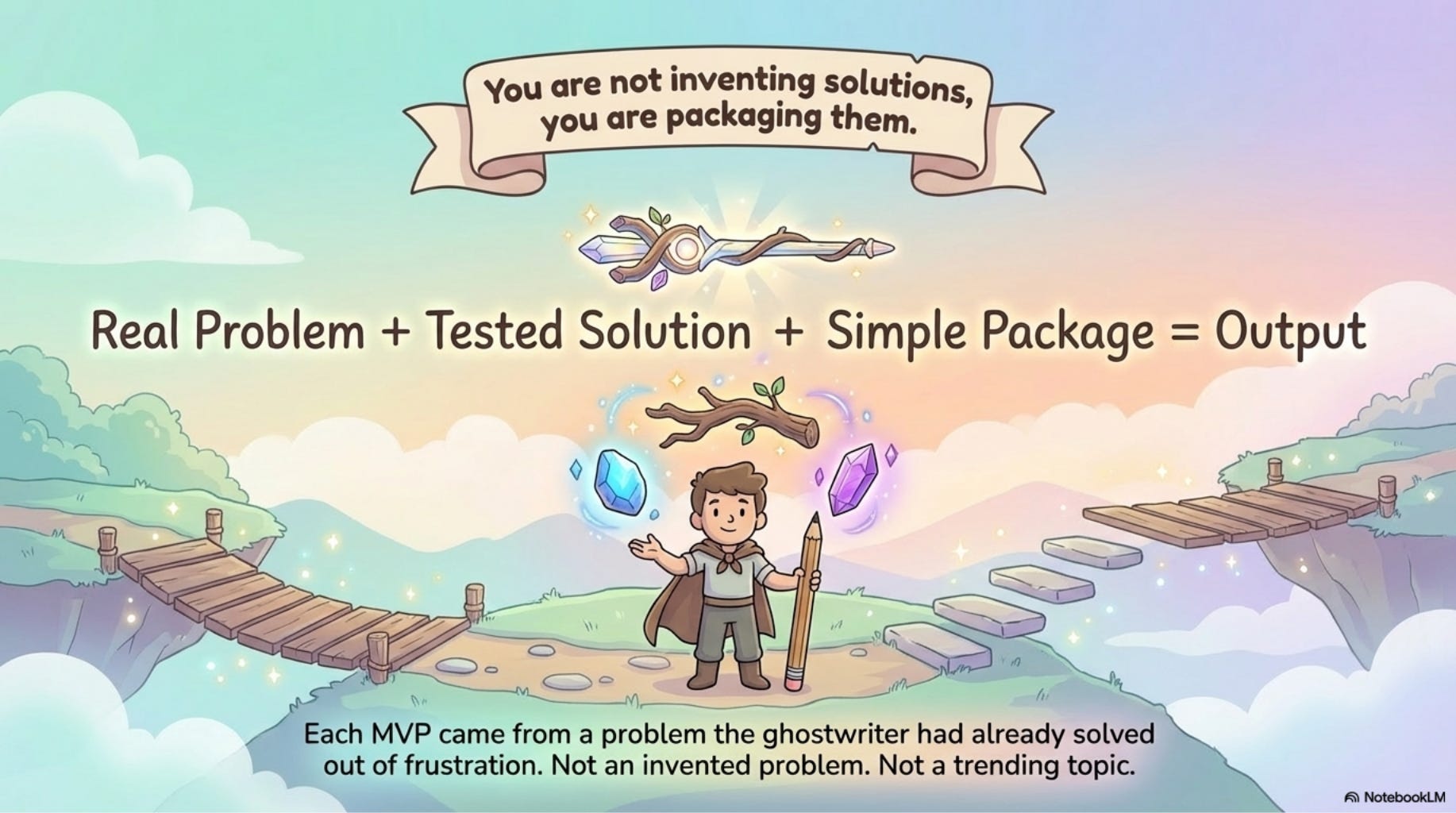
Each MVP came from a problem the ghostwriter had already solved.
Not an invented problem.
Not a trending topic.
Not something they assumed people wanted.
A real problem. A tested solution. Packaged simply.
That is Output done right.
You are not inventing solutions from scratch.
You are packaging solutions you already have.
Where AI Fits Into This Step
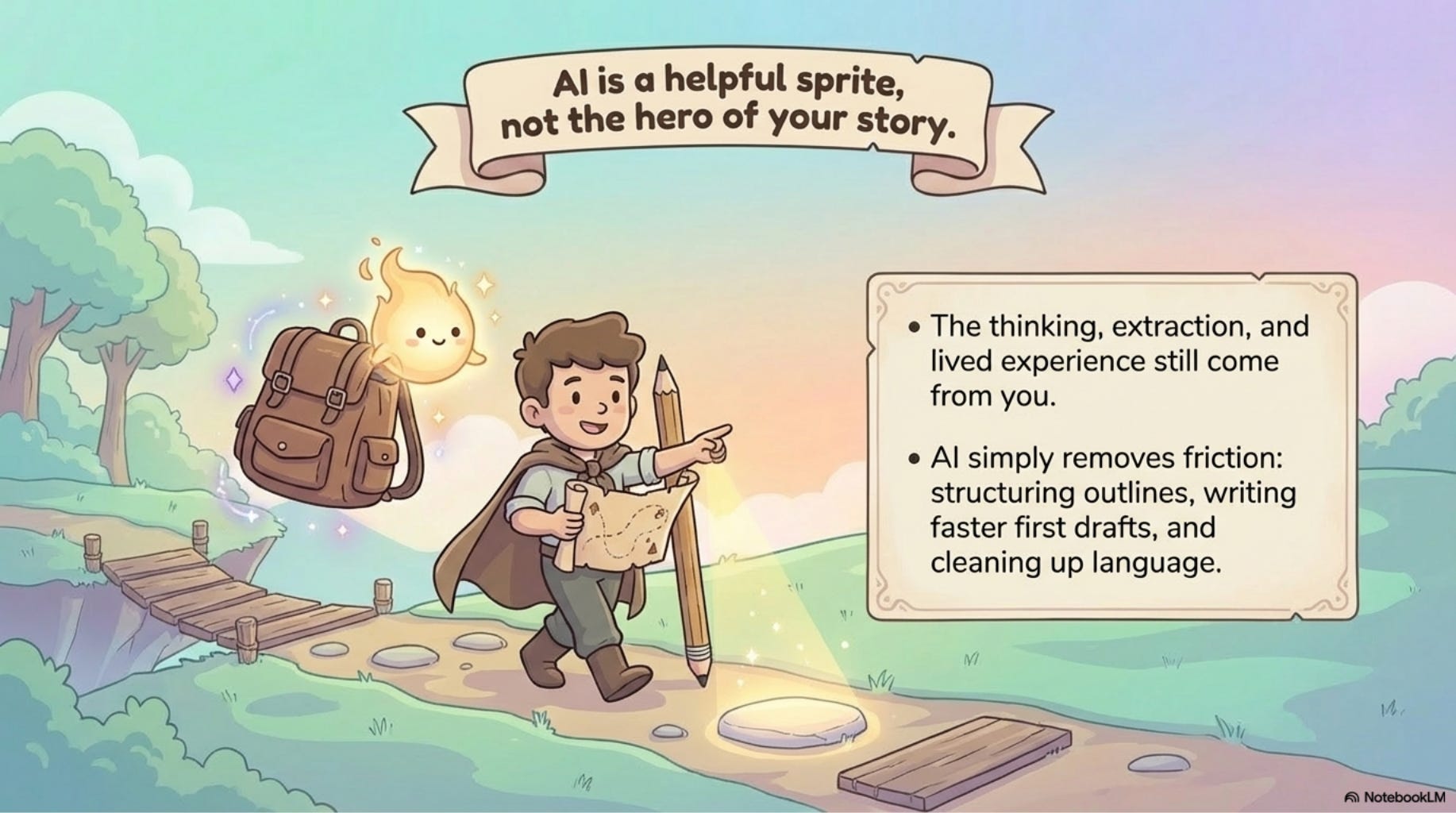
This is also where AI becomes a genuine partner in your process.
Not to replace your thinking.
But to remove friction and speed up execution.
Once your four filters are locked in, AI can help you:
Structure the outline of your template or guide
Write the first rough draft faster
Suggest section headings you might have missed
Clean up language and sharpen clarity
The thinking still comes from you.
The extraction still comes from you.
The lived experience still comes from you.
AI just helps you go from idea to finished product without getting stuck in the middle.
Use it to finish up your MVP
Not to keep rewriting endlessly.
The Win of Shipping Small
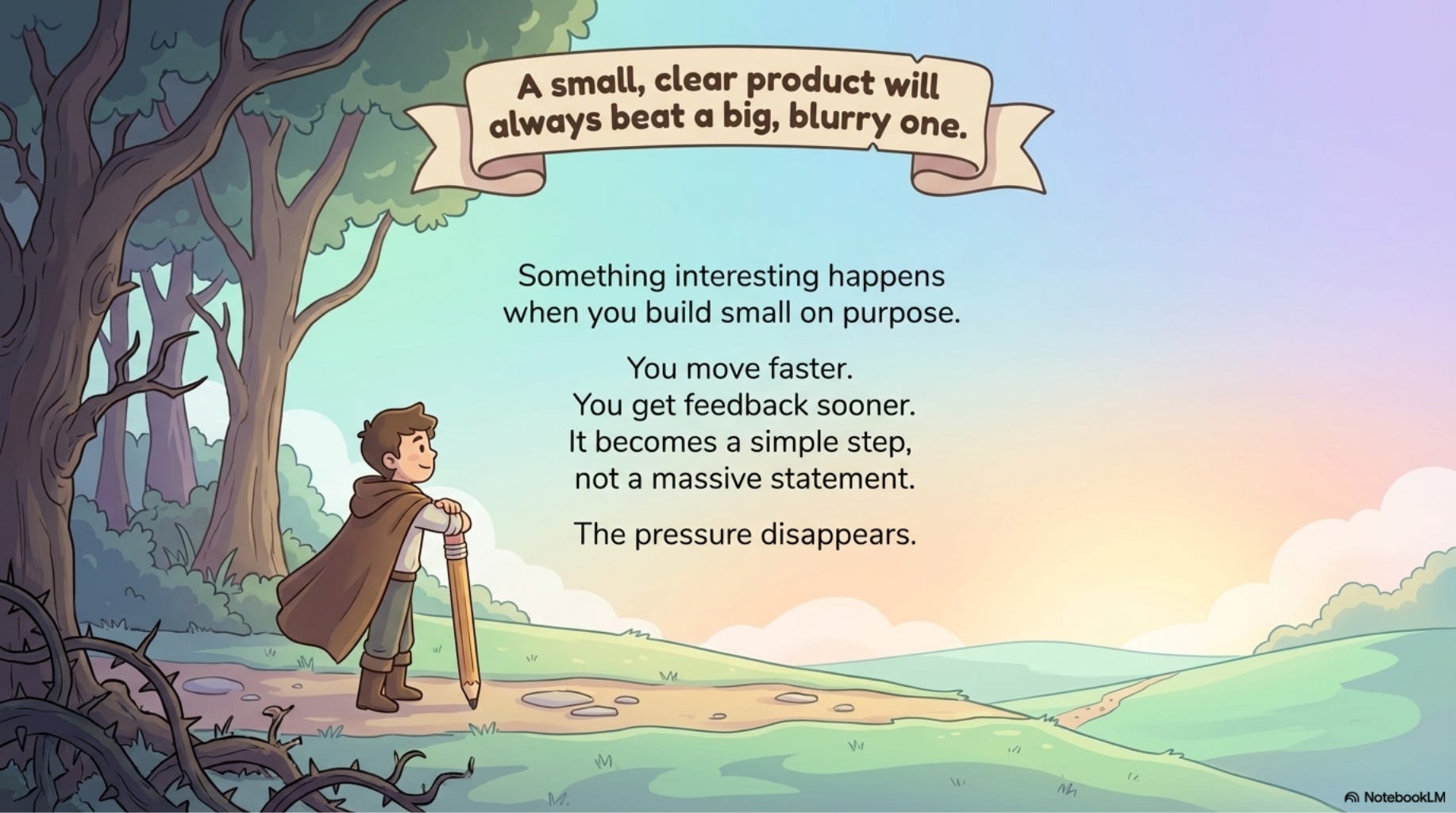
Something interesting happens when you build a smaller product.
You move faster.
You get feedback sooner.
You improve faster.
You stop treating the product like “the big thing” you have to get right.
It becomes a step. Not a statement.
And that shift alone removes so much unnecessary pressure from the process.
Because here’s what I’ve learned:
A small, clear product that works will always beat a big, blurry one.
Every single time.
Your Action Step Before Step 4
Before you move forward, complete this exercise.
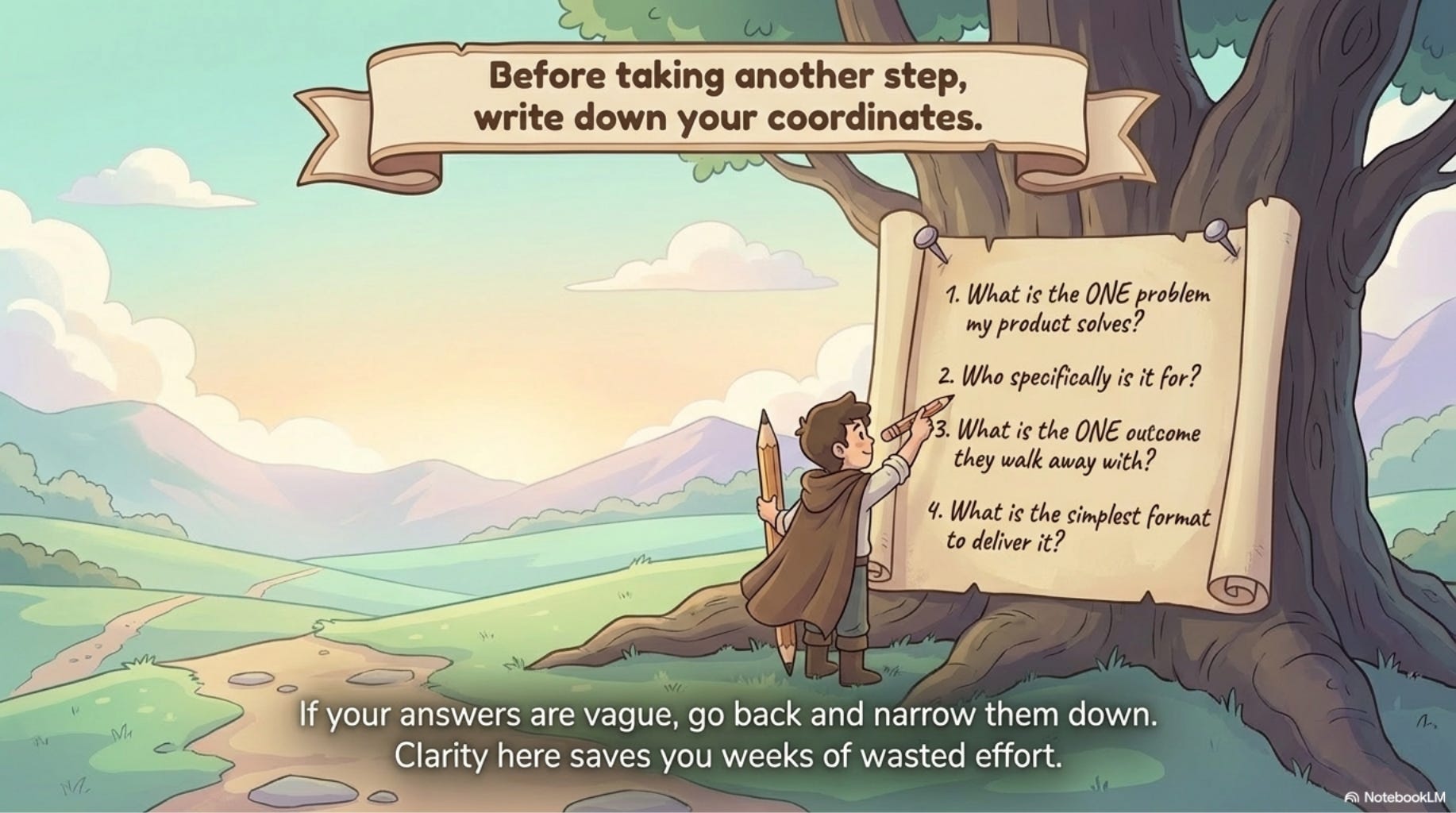
Answer these four questions in writing:
What is the ONE problem my product solves?
Who specifically is it for?
What is the ONE outcome they walk away with after using it?
What is the simplest format that can deliver that outcome?
If you can answer all four clearly and specifically, you’re ready to build.
If your answers are still vague or broad, go back and narrow them down.
Clarity here saves you weeks of wasted effort later.
What Comes Next
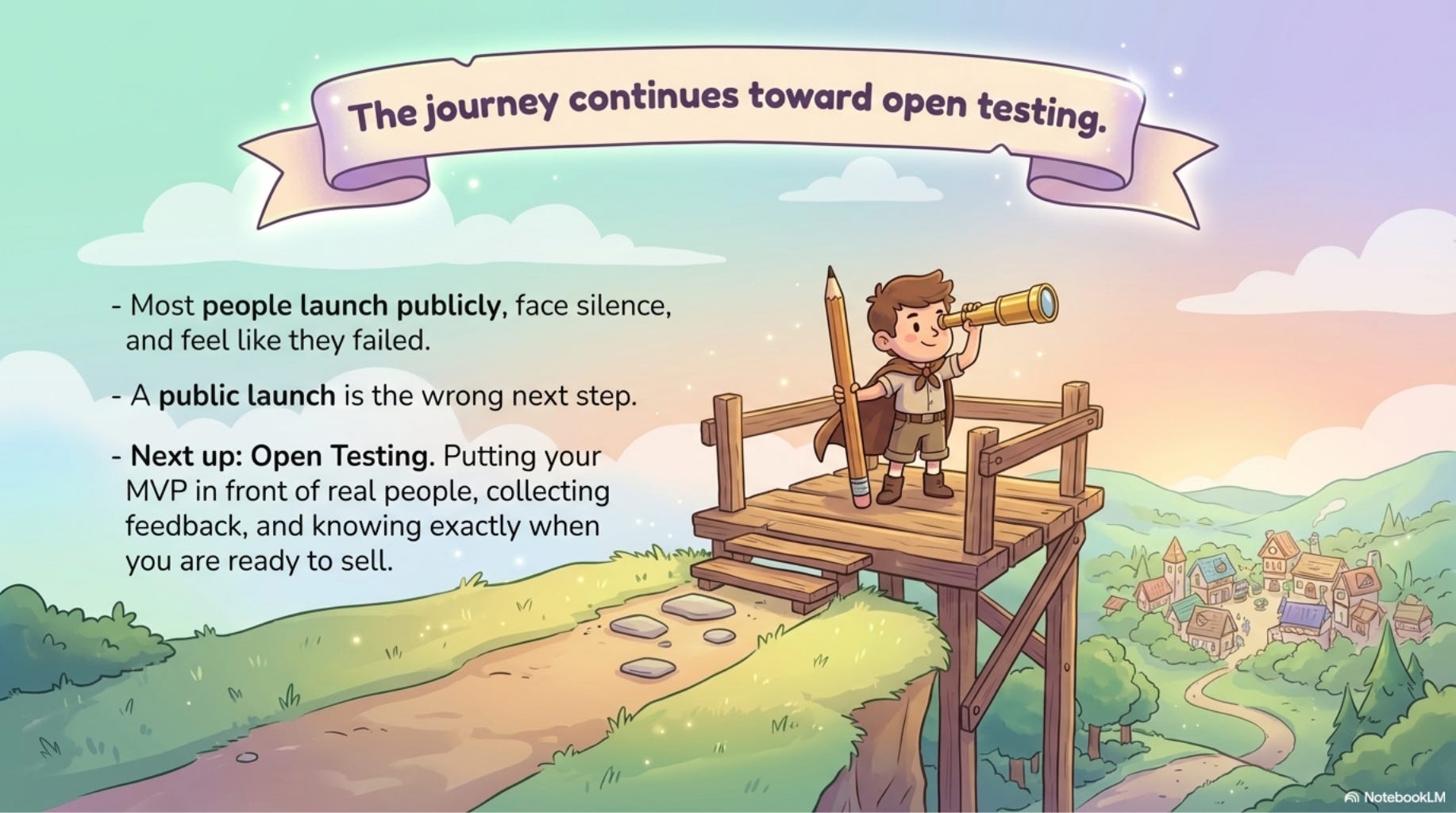
Here’s what most people do after building their MVP.
They launch it.
Publicly.
With a sales page, a price tag, and a hope that people will buy.
And when the silence comes, it feels like failure.
But it’s not failure.
It’s just the wrong next step.
Because after Output comes something more important than a launch.
It’s called Open Testing.
And it’s the step that protects you emotionally,
improves your product faster, and makes sure you’re not launching into silence.
In the next training,
I’ll walk you through on how to put your MVP in front of real people without the pressure of a public launch,
how to collect feedback that actually makes your product stronger,
and how to know when you’re ready to sell.
Closing
Most ghostwriters are sitting on solutions right now.
Real solutions.
Tested solutions.
Solutions they built out of frustration, refined through experience, and have been giving away for free inside their service.
They just haven’t packaged them yet.
That’s all Output is asking you to do.
Package what you already have.
Keep it small.
Keep it focused.
Get it done.
Not perfect.
Done.
Before you go, one last question:
Think about a problem you’ve already solved in your own Solopreneur or ghostwriting journey something that used to slow you down but doesn’t anymore.
What was it?
Drop it in the comments in one sentence.
You might already be looking at your next digital product. 👇